We had a couple of days with a local guide in the Sa Pa region up by the Chinese border. SaPa town was established by the French as a hill station retreat from the heat of lower altitudes, but today has grown chaotically into a frenzied mess of tourists, trekkers, and Hanoi weekenders, with bulldozers and diggers relentlessly tearing at the hillsides and terracing new levels for yet more villas and apartments. We were staying a ways outside SaPa town, but had to pass through one day, twisting up on the approach road and crossing the wide scar left by one of the landslides from last fall that marooned the town by cutting off both of the two access roads through the mountains. As the van bounced wildly through the one-at-a-time dirt crossing across the slide site we started to wonder when they would get around to repairing it but knew that the answer was “they already have”.
Anyhow, our guide, May, was from the Red Dao ethnic minority, and her goal with us was to show us around her group’s “village” and also those of the Black H’Mong and Dzao. Which was a bit of an eye opener, when filtered through her insider’s lens. For example, in response to a question about how girls are treated and whether Red Dao people marry into other groups, we heard how May essentially ran away from her village at 14 to work washing dishes in SaPa in return for food and a bed to avoid being married off by her parents – a proposition first advanced when she was 13 – to someone the shaman had said was propitious. Ok, well that was neither the abstract nor generic answer we expected.
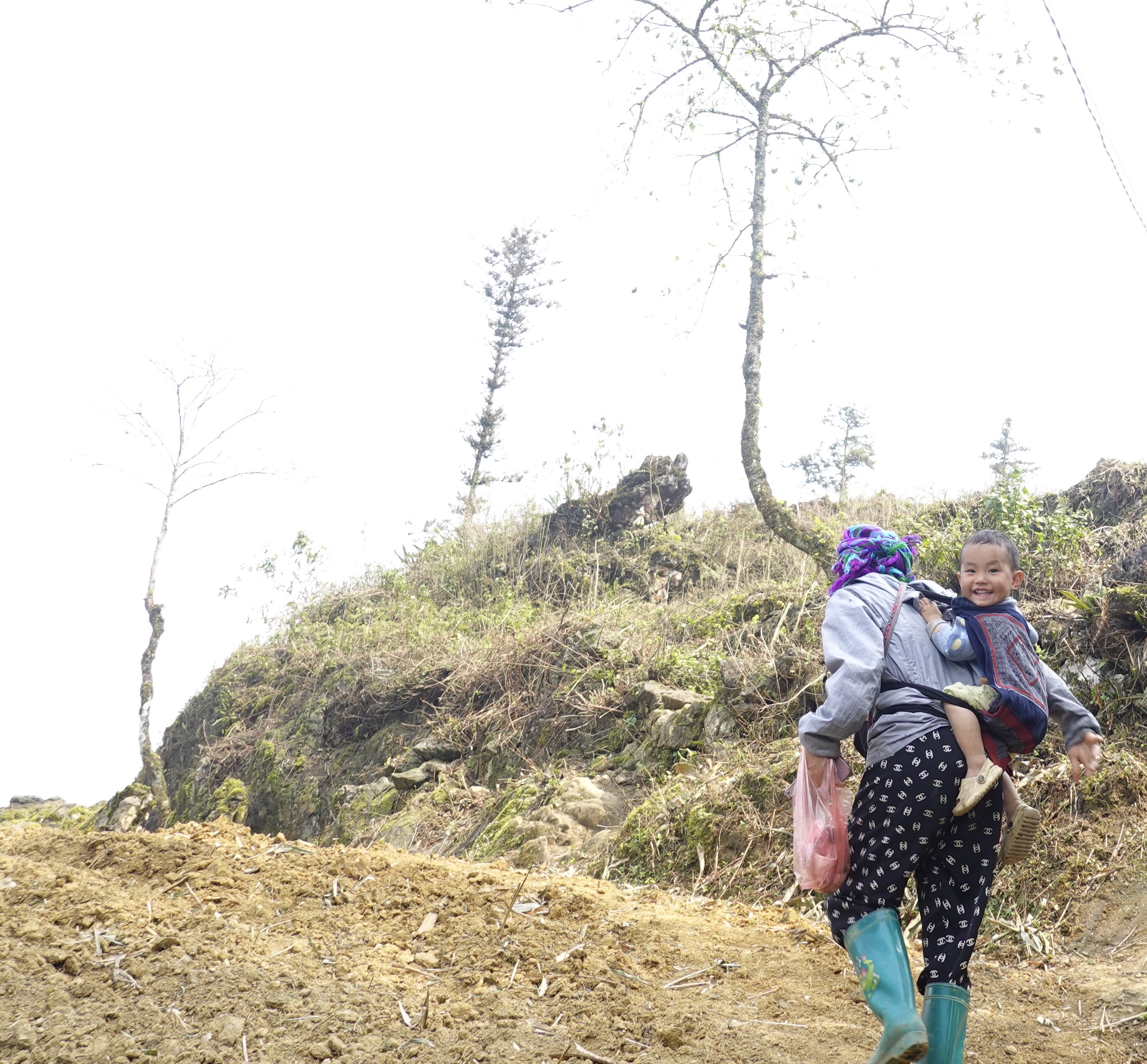
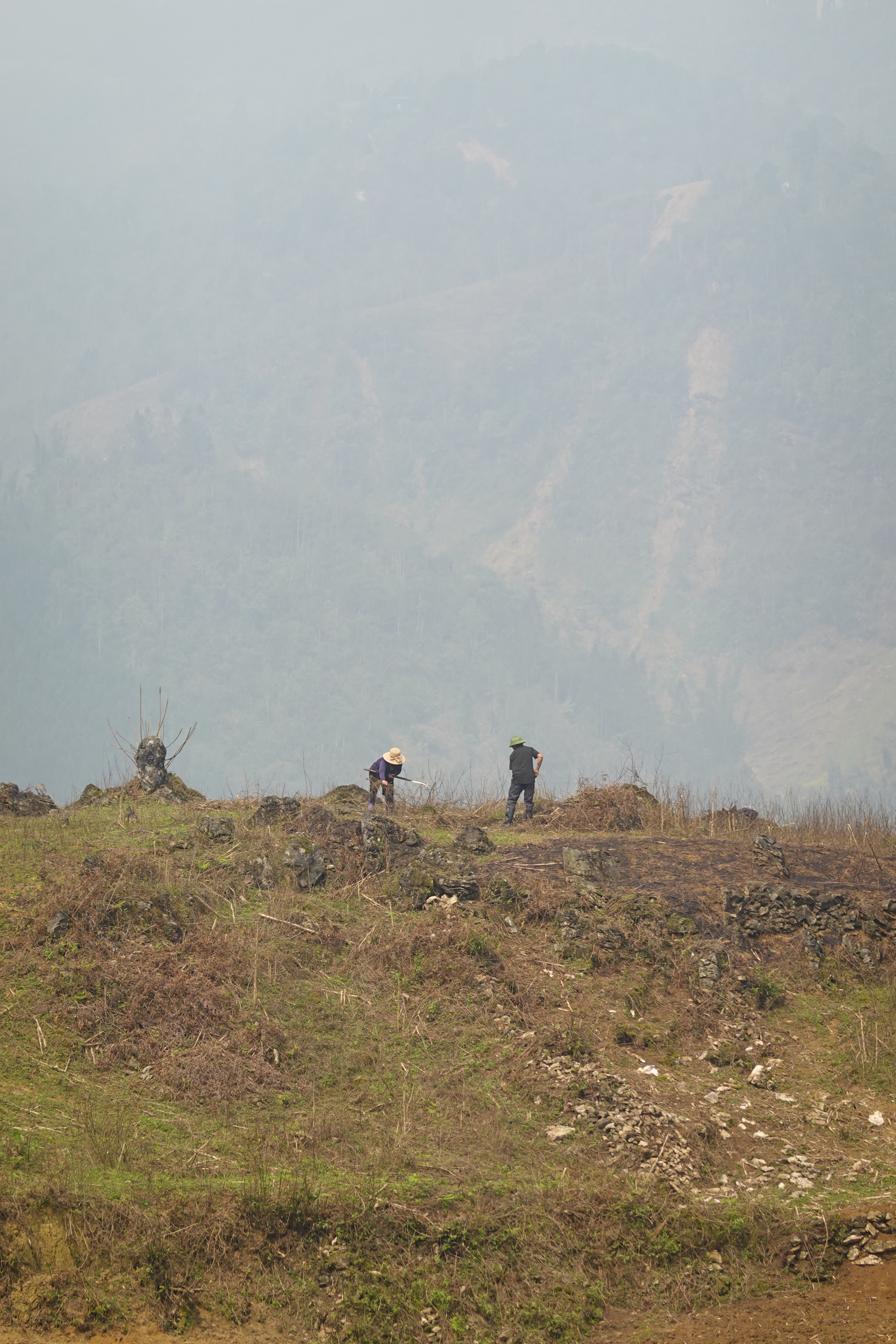
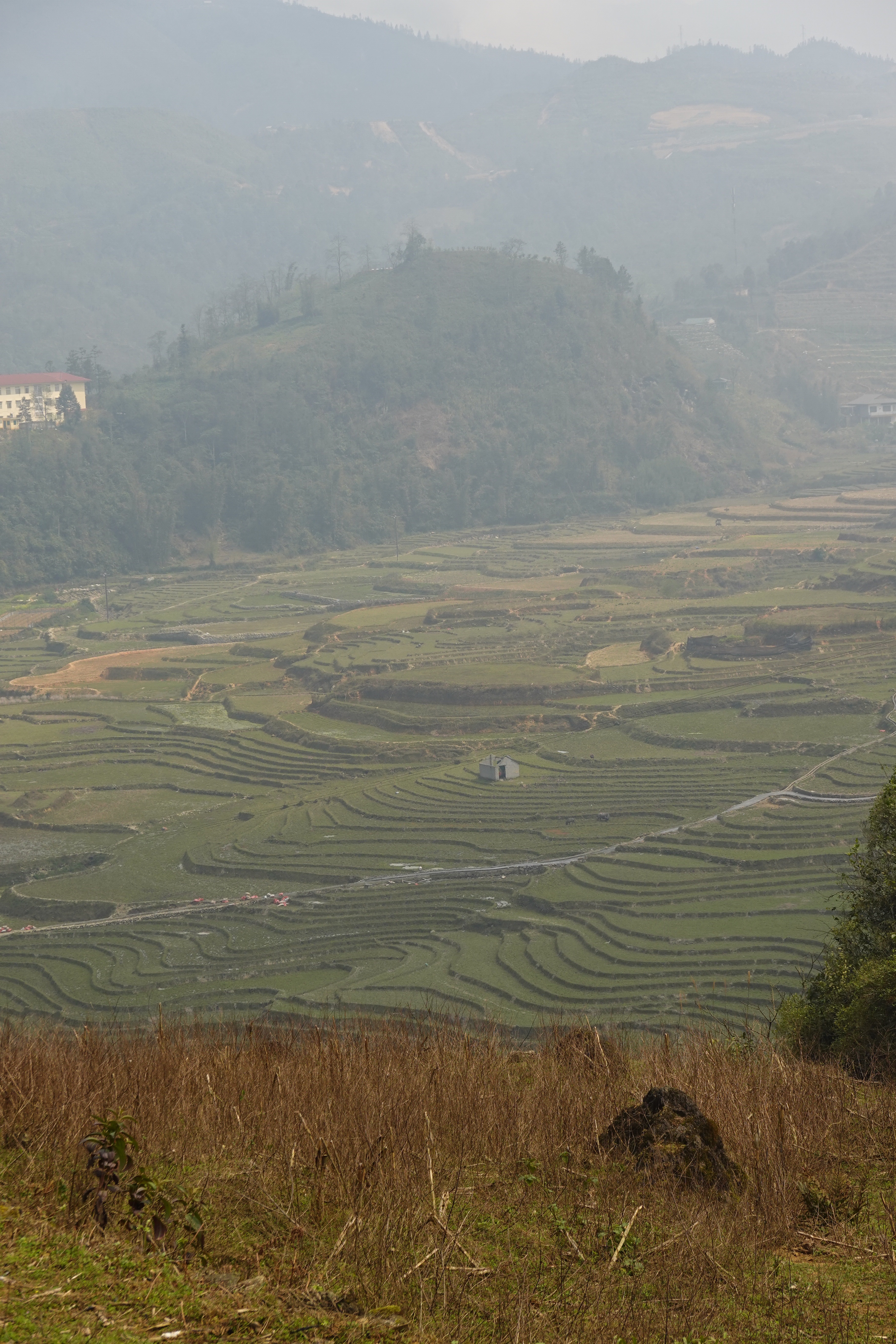
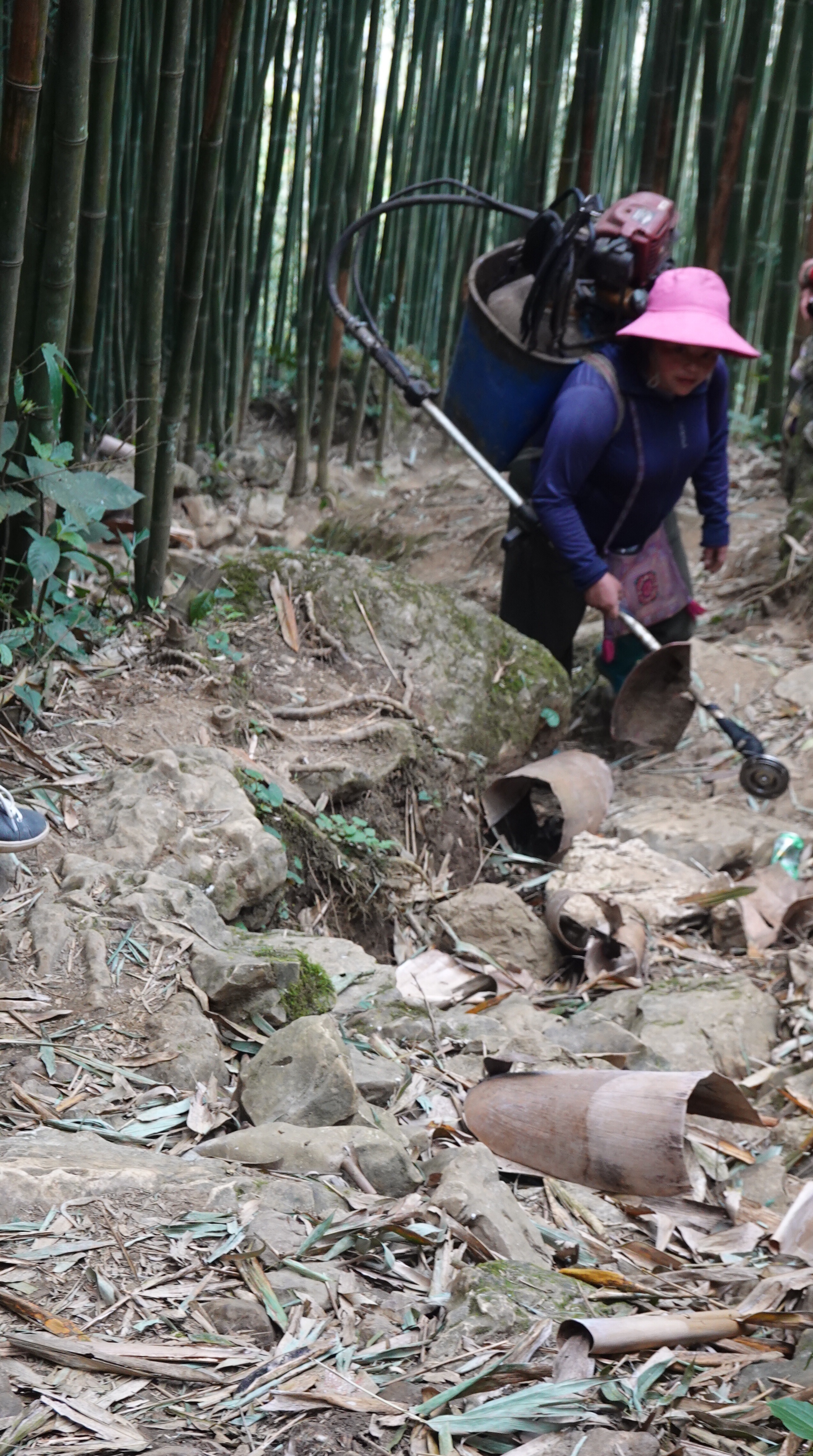
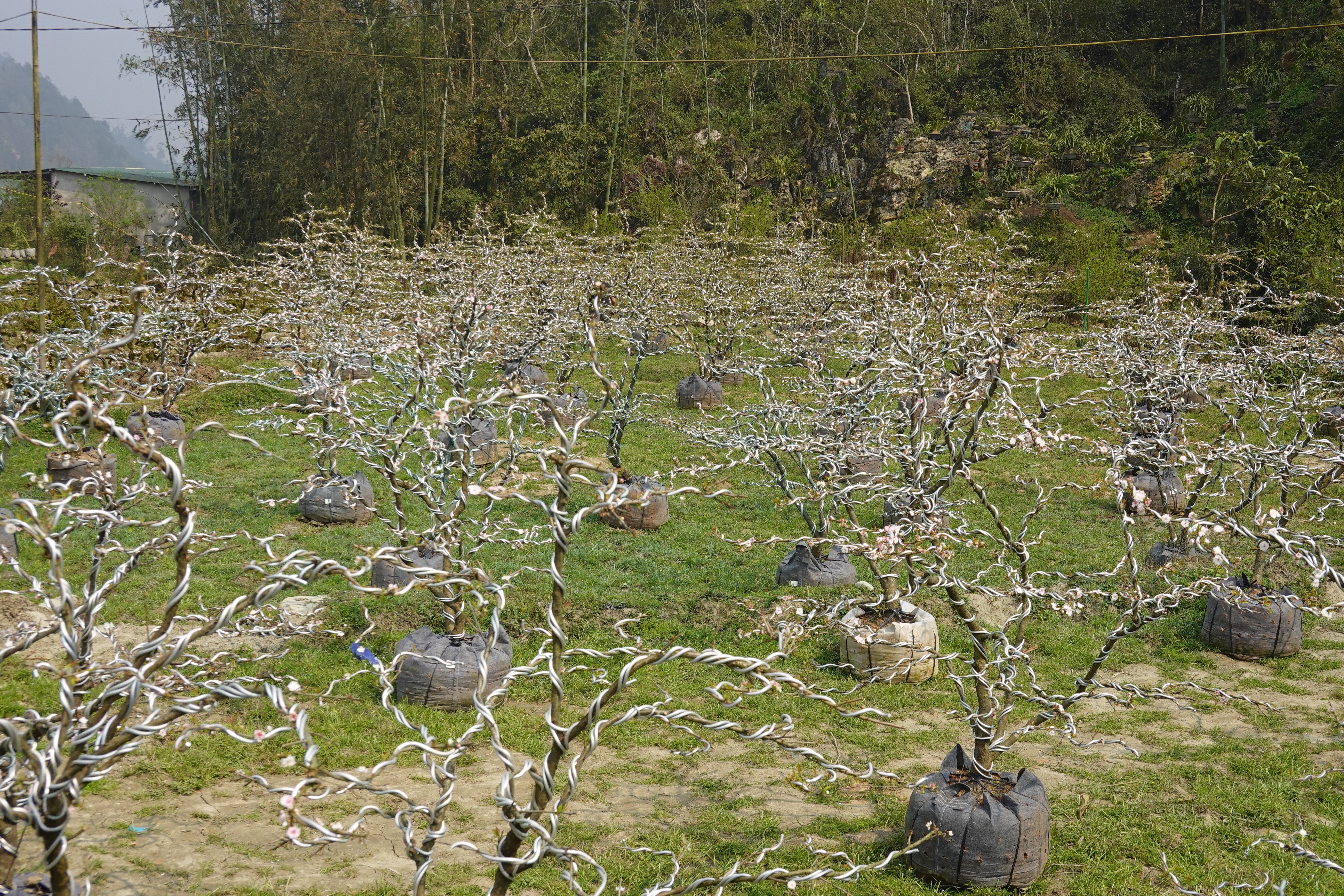
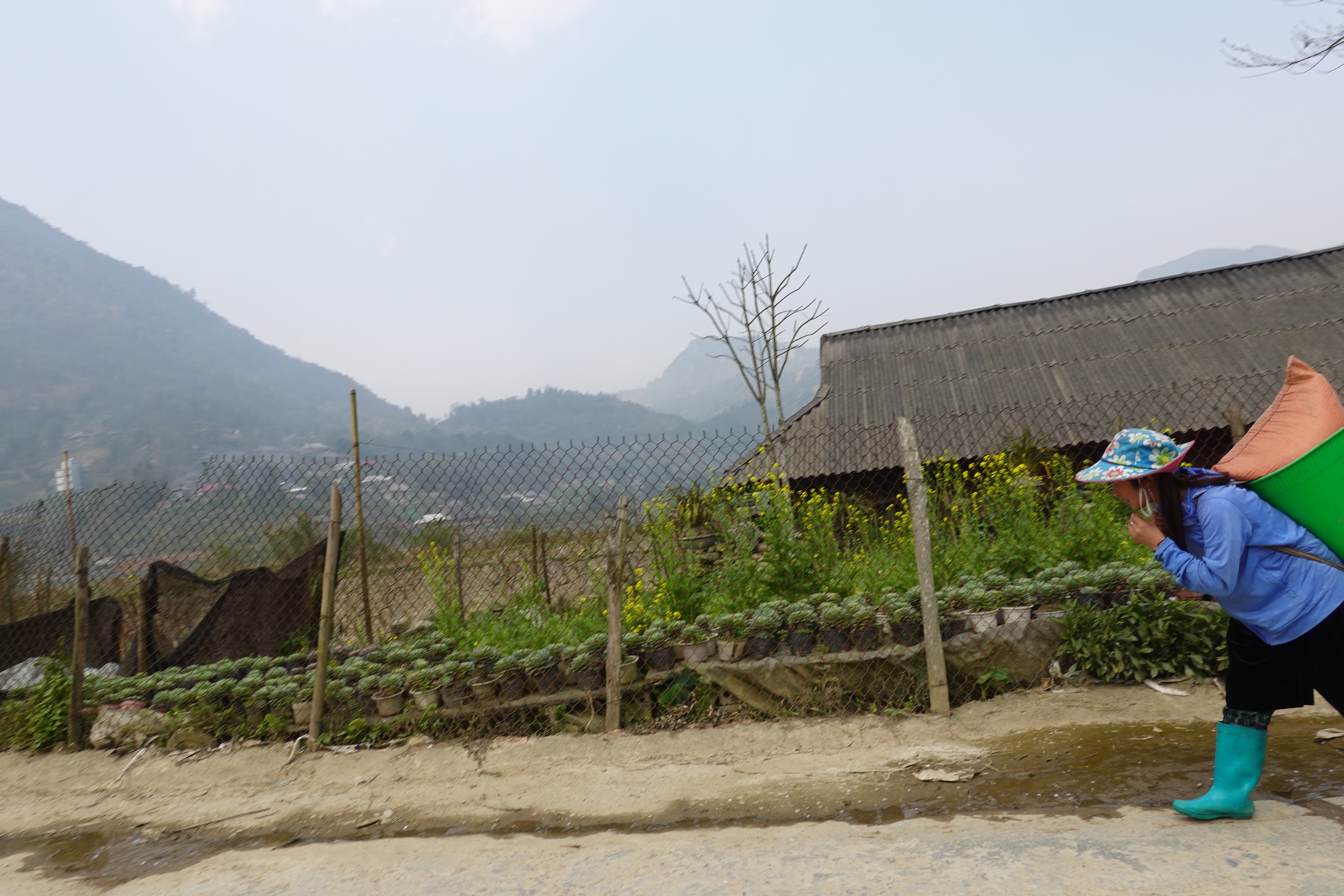
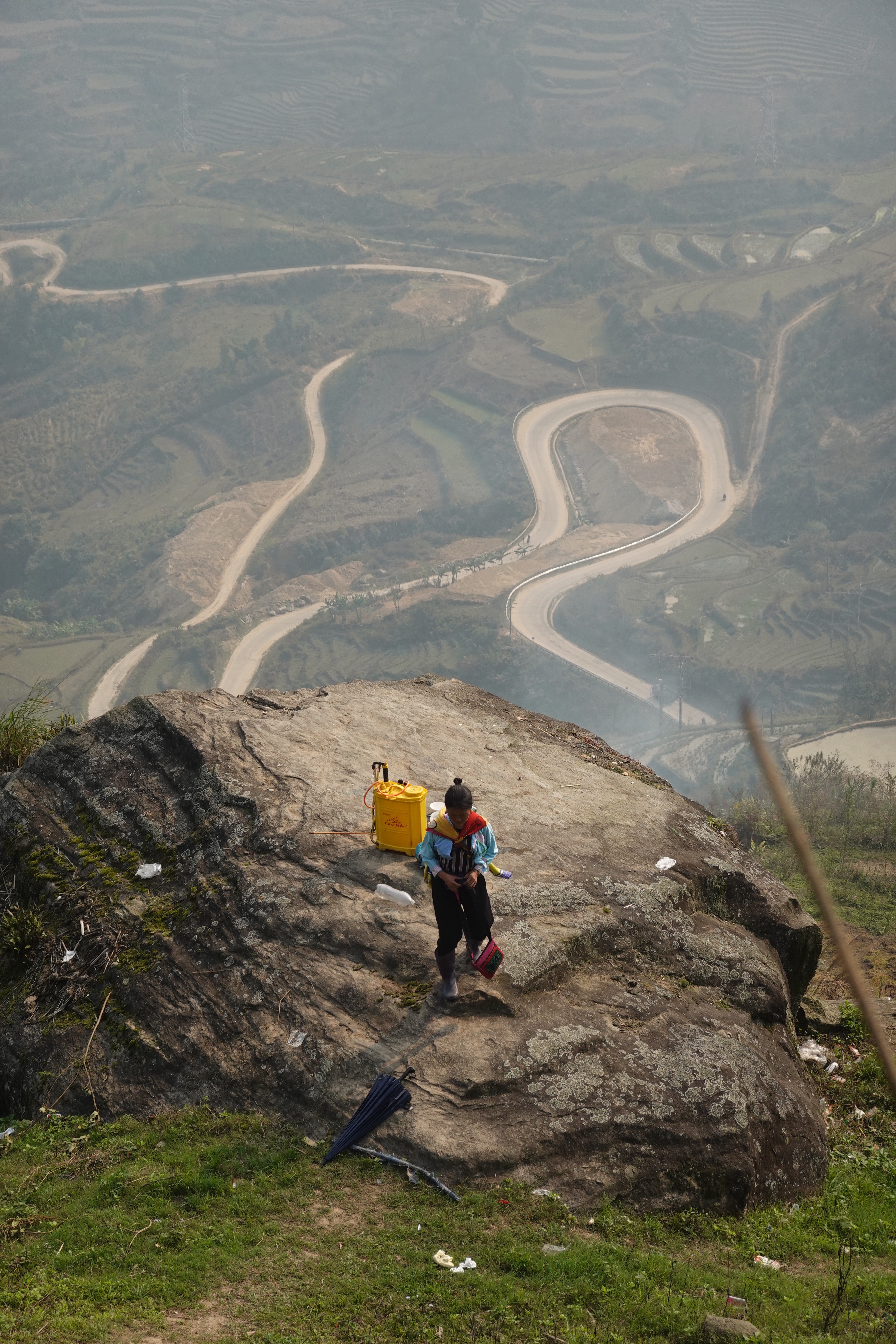
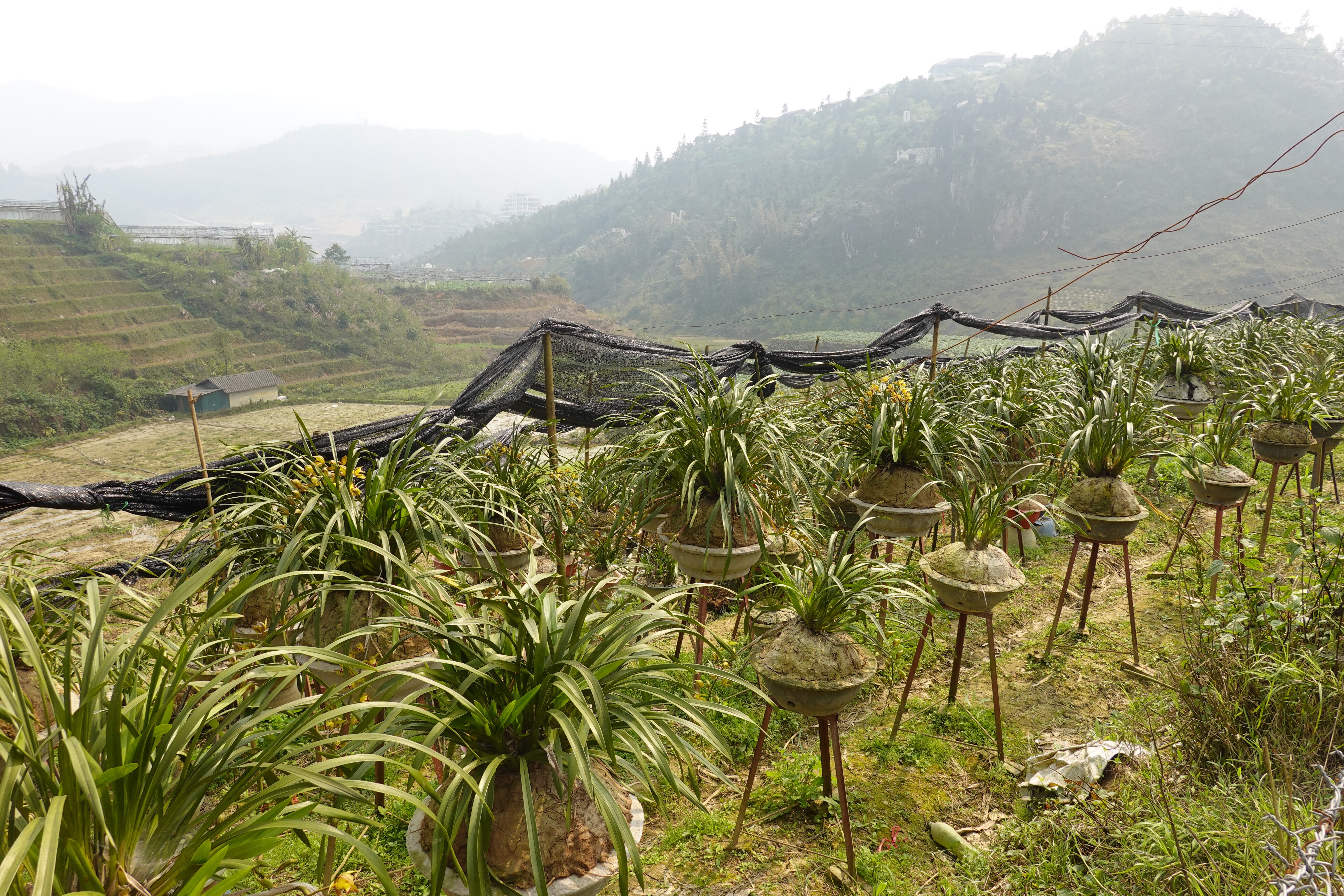
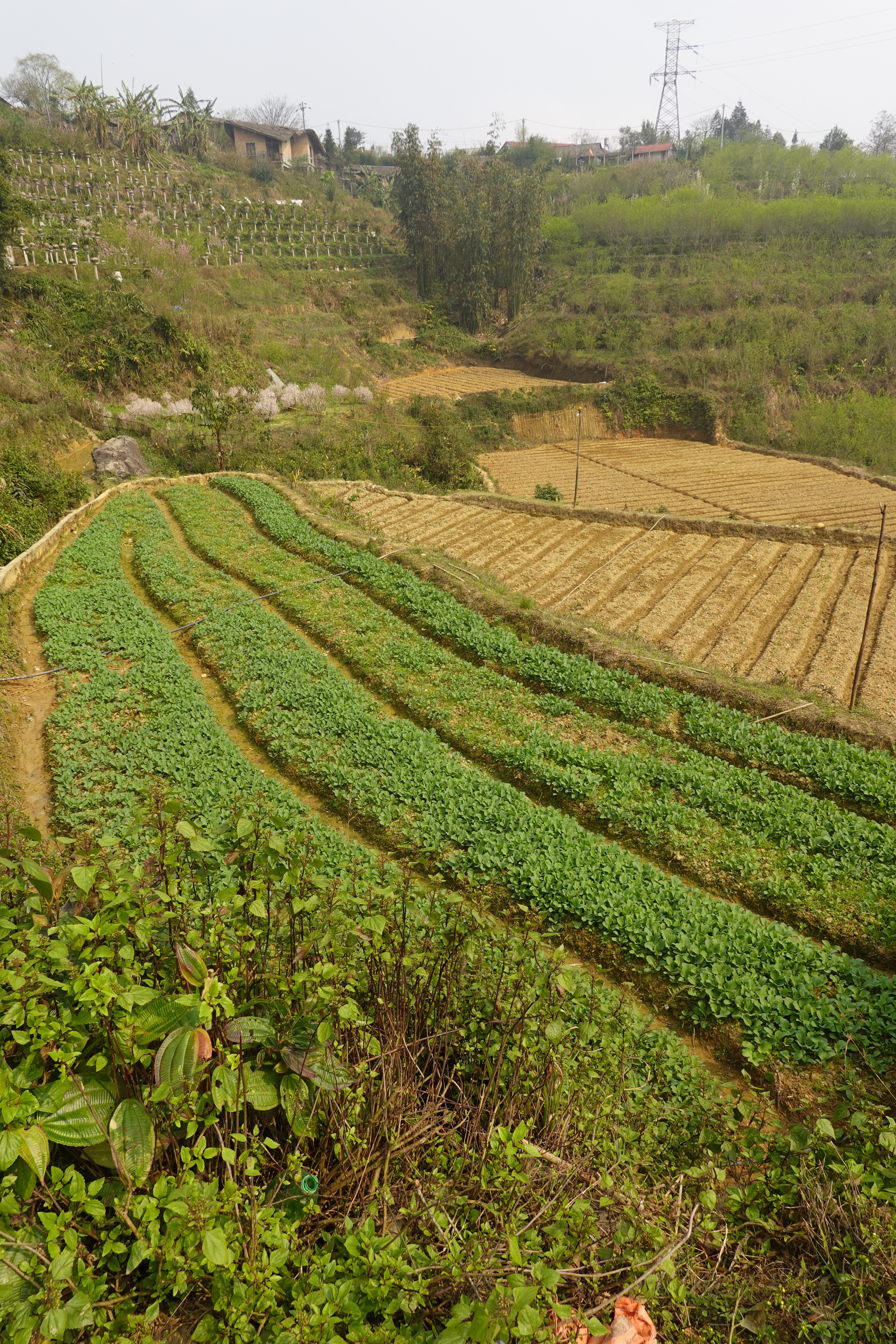
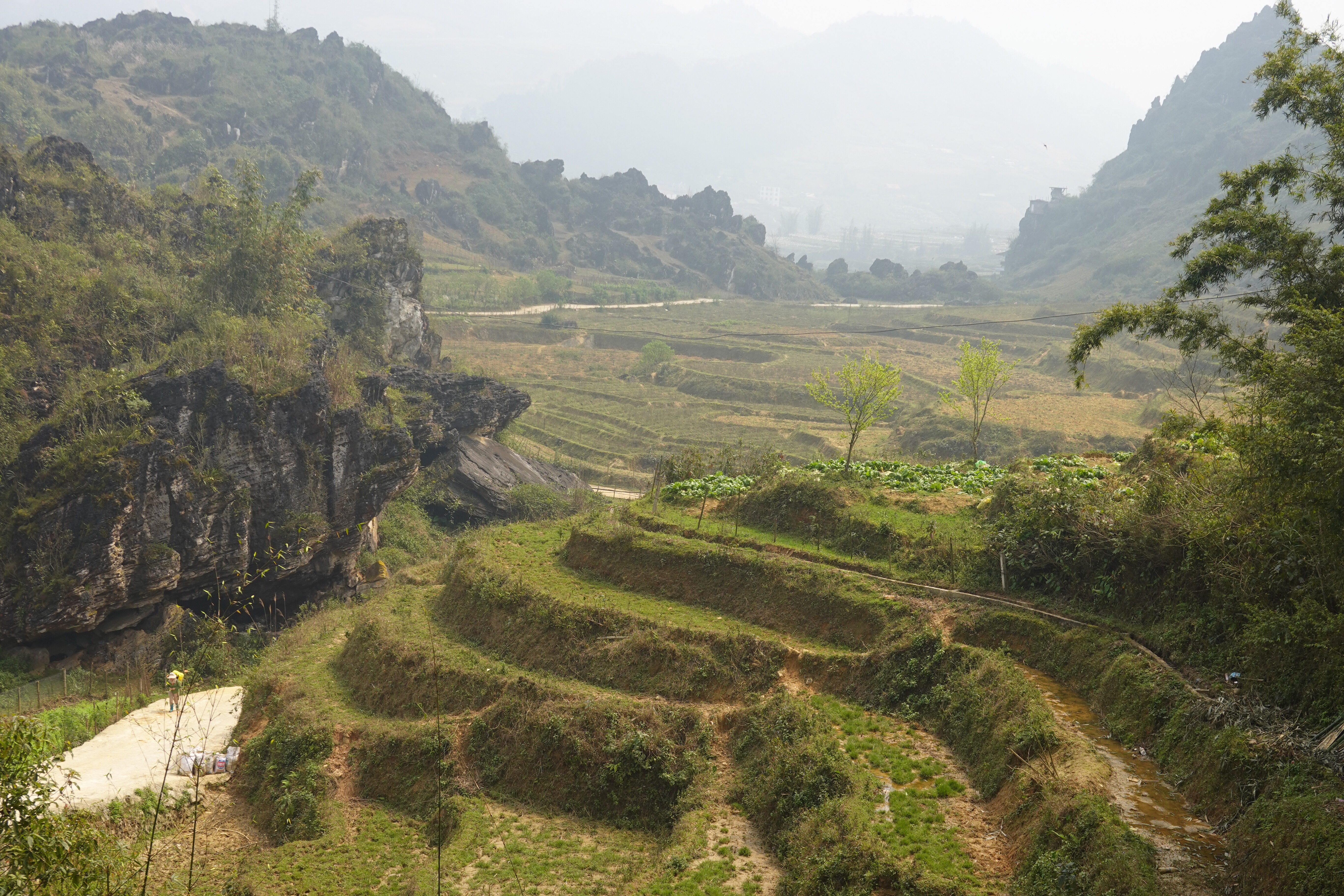
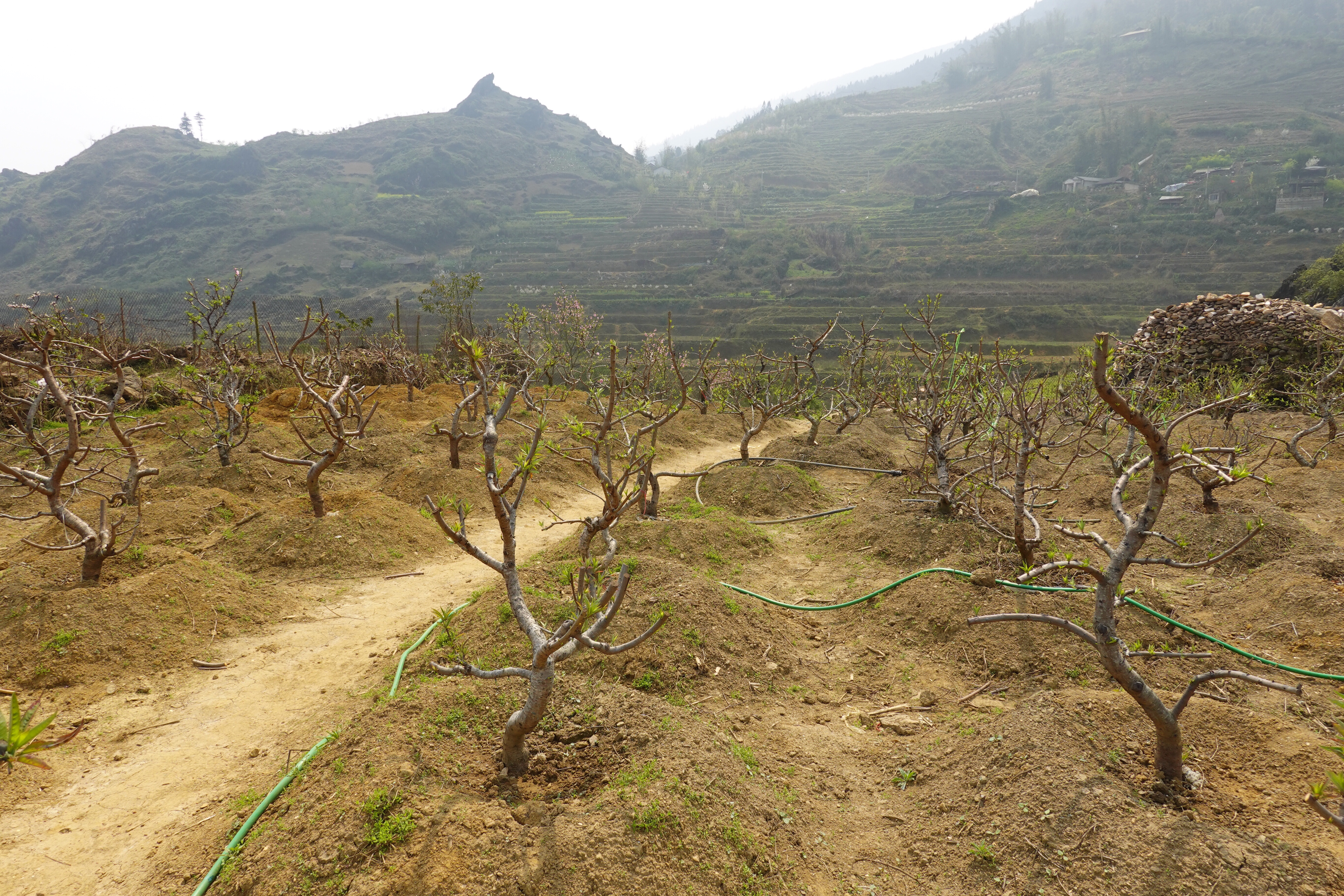
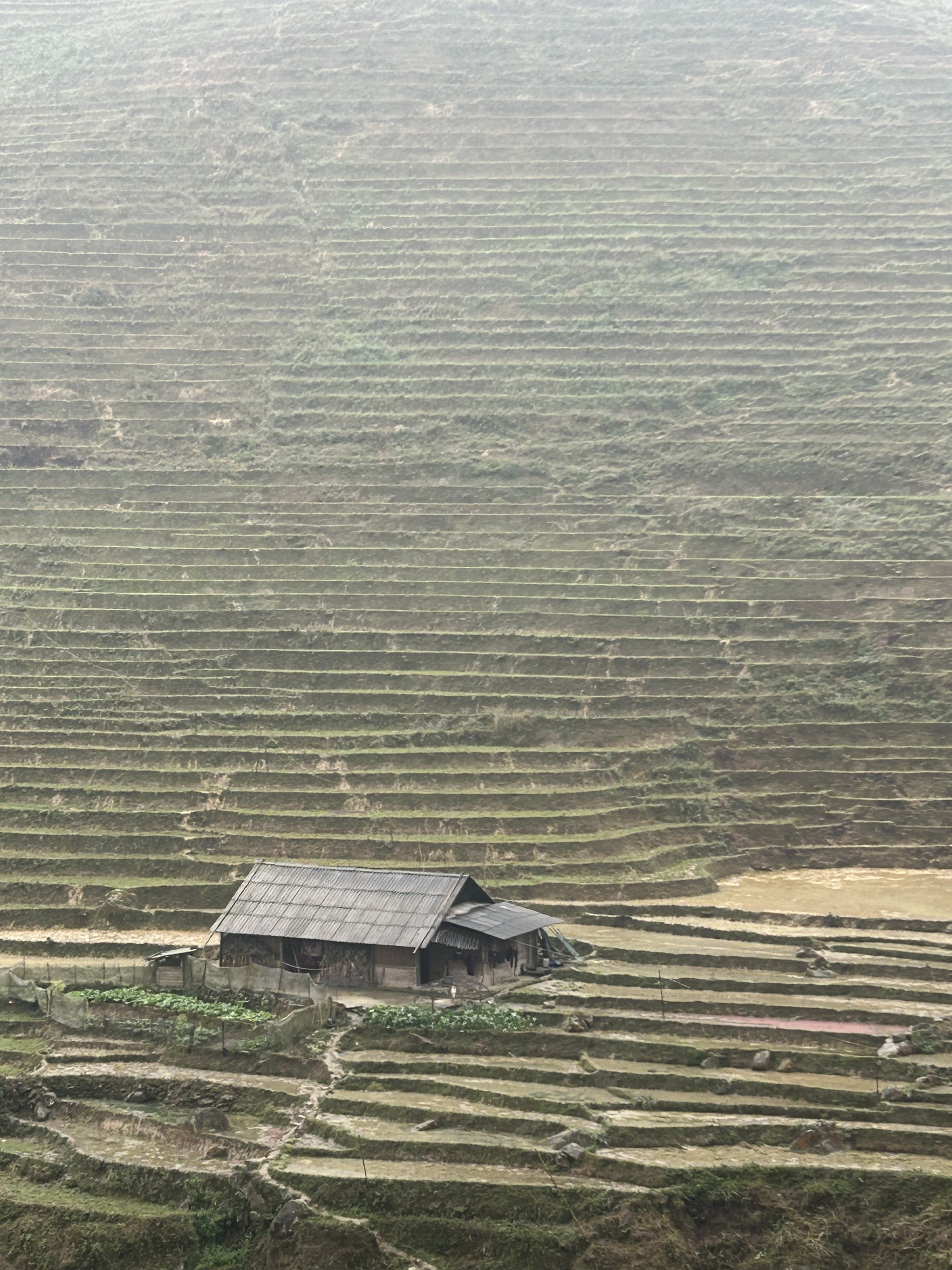
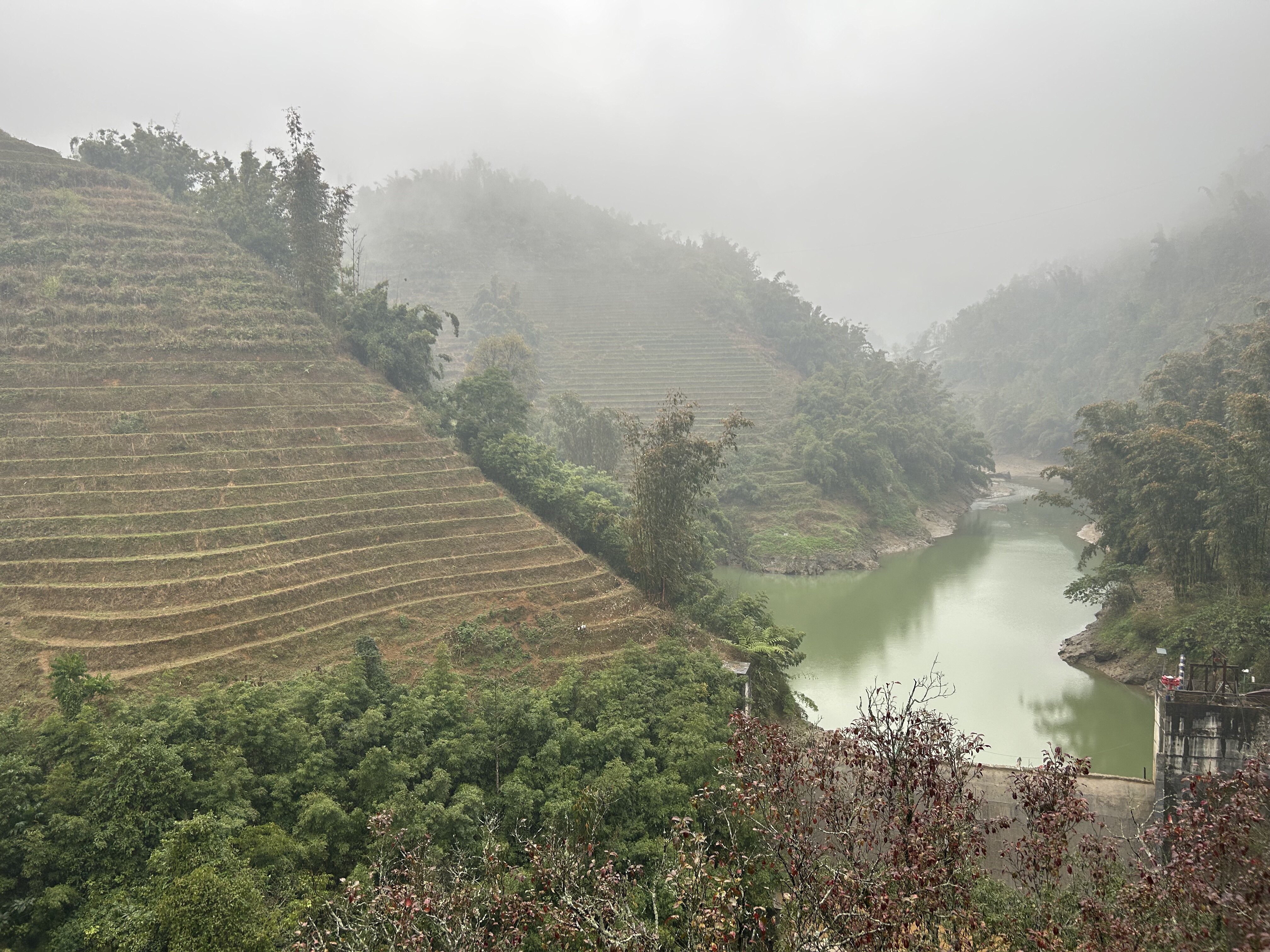
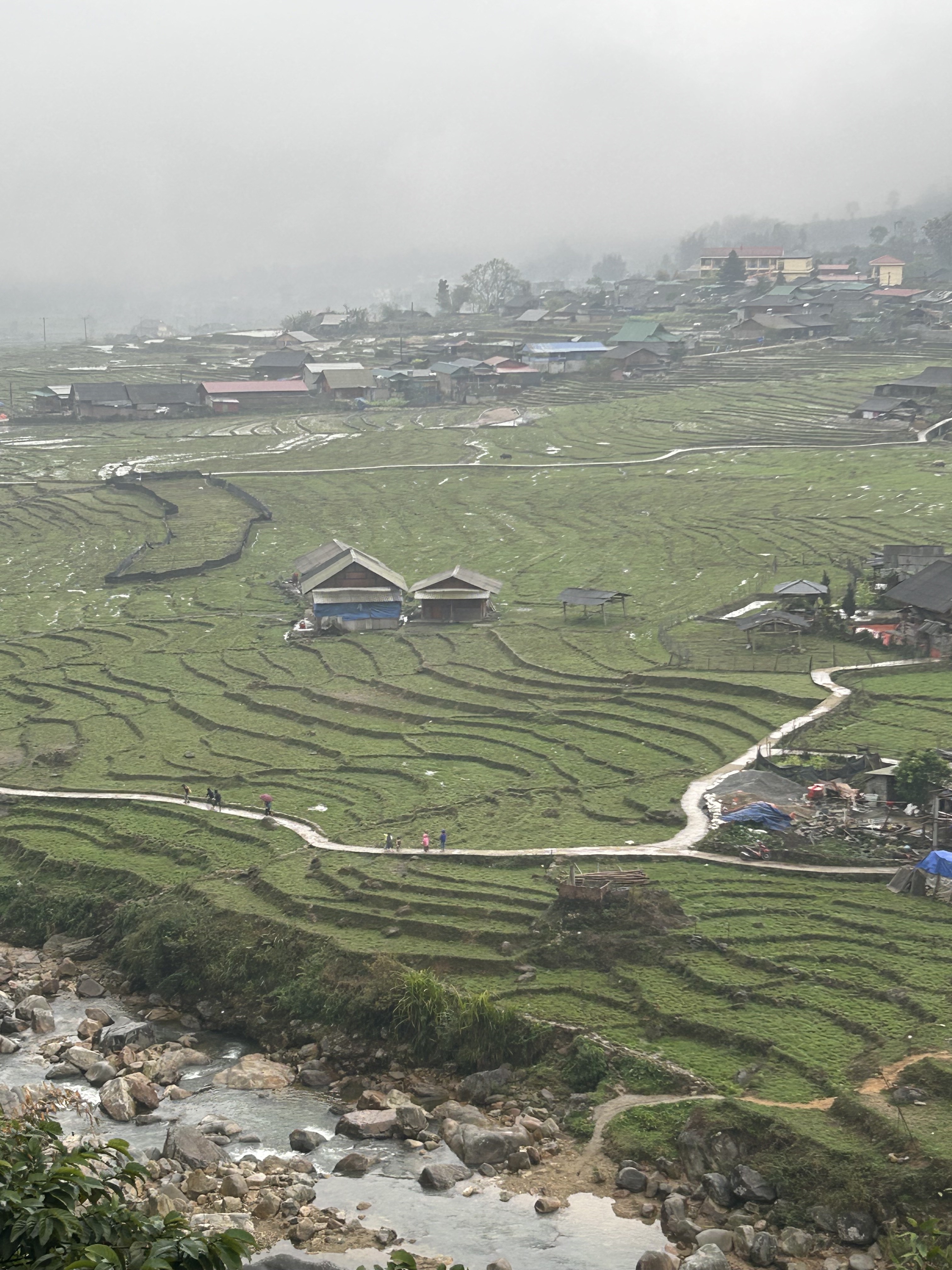
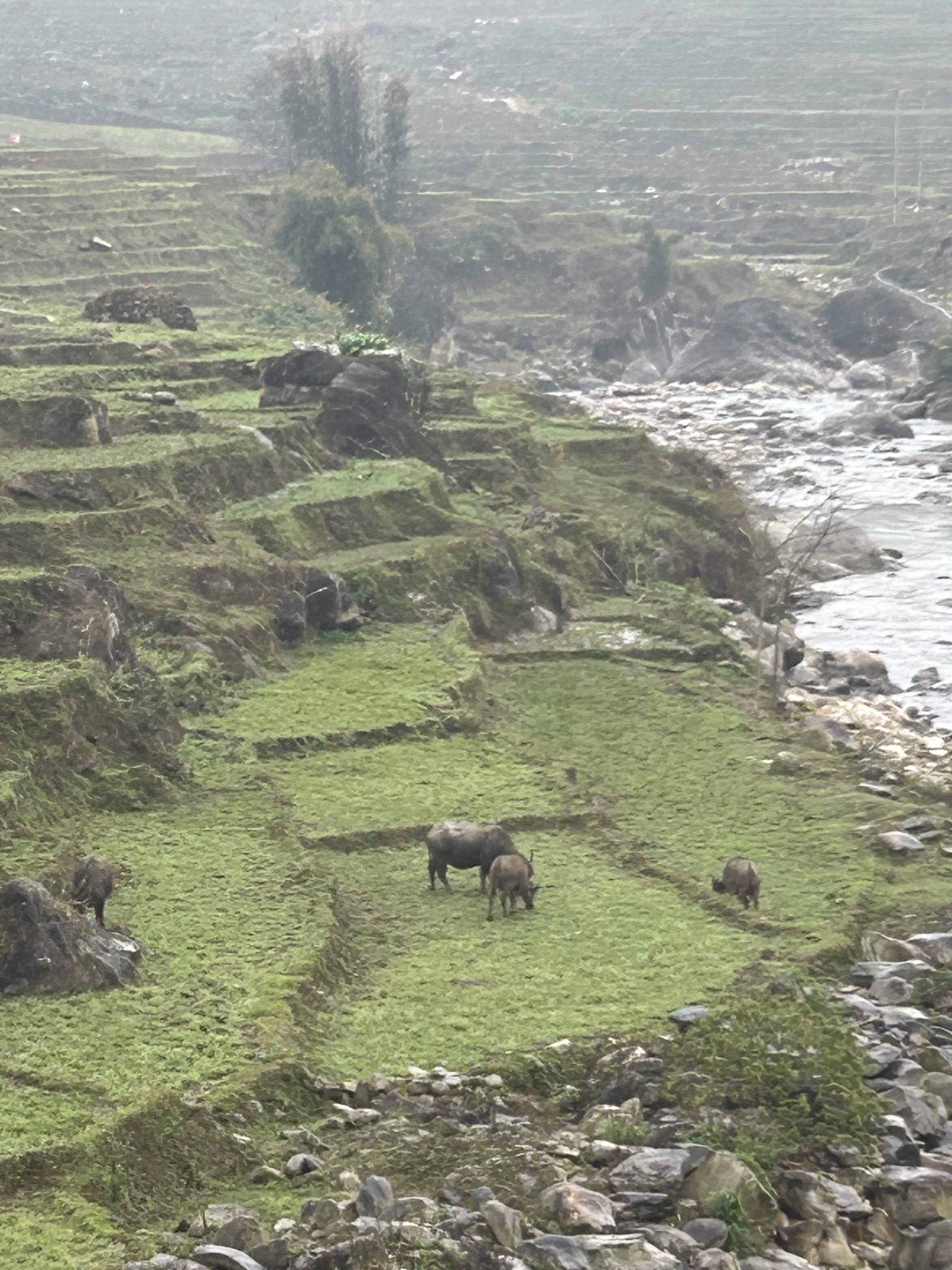
So we had a couple of very different days with May and saw a bunch of different things. Our first day was warm and sunny and spent in Red Dao territory (she had looked at the weather and decided to show us her village when the weather would be best). “Village” is at best a flexible construct, and seems to refer to any tightly packed or widely dispersed set of dwellings and agricultural or commercial structures that thinks of itself that way. In May’s case the village started with a few random houses and barns that appeared along the small concrete road we walked on, up one hill and down another, and included some little hillside patches of farmland we walked through on a well worn path, with rice terraces spilling down hillsides and along valley floors – although at this altitude they get only one rice crop per year, the terraces are planted with other crops like corn in the “off-season” – and extended to a rocky crest with different patches of what looked like unfarmable land marked out with rocks to prevent the neighbours from encroaching, and then on to a steep descent through a bamboo forest and then plots growing everything from ornamental peach trees to ornamental apricot trees (with their branches wrapped in metal strips to shape them) to strawberries (though what was on offer in the local markets came from China) to a suddenly bustling crossroads with little shops and noodle houses and traffic and people. Whew. We learned that the farmers we passed as they moved uphill through the forest, and who had not been young for a long time, were each carrying 20 litres of water on their backs, as well as their other gear, so that they could water their hilltop plots that had no irrigation.
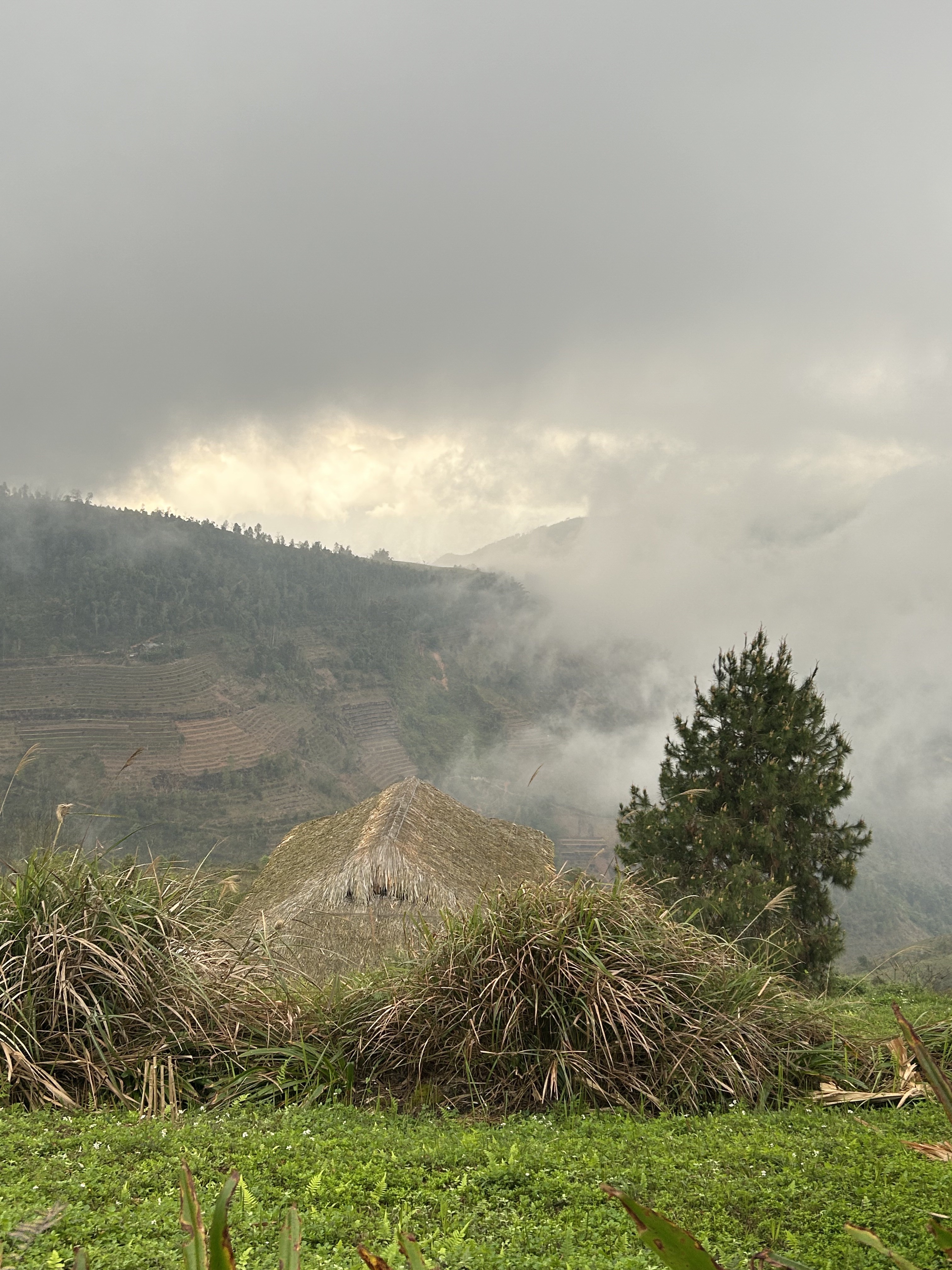
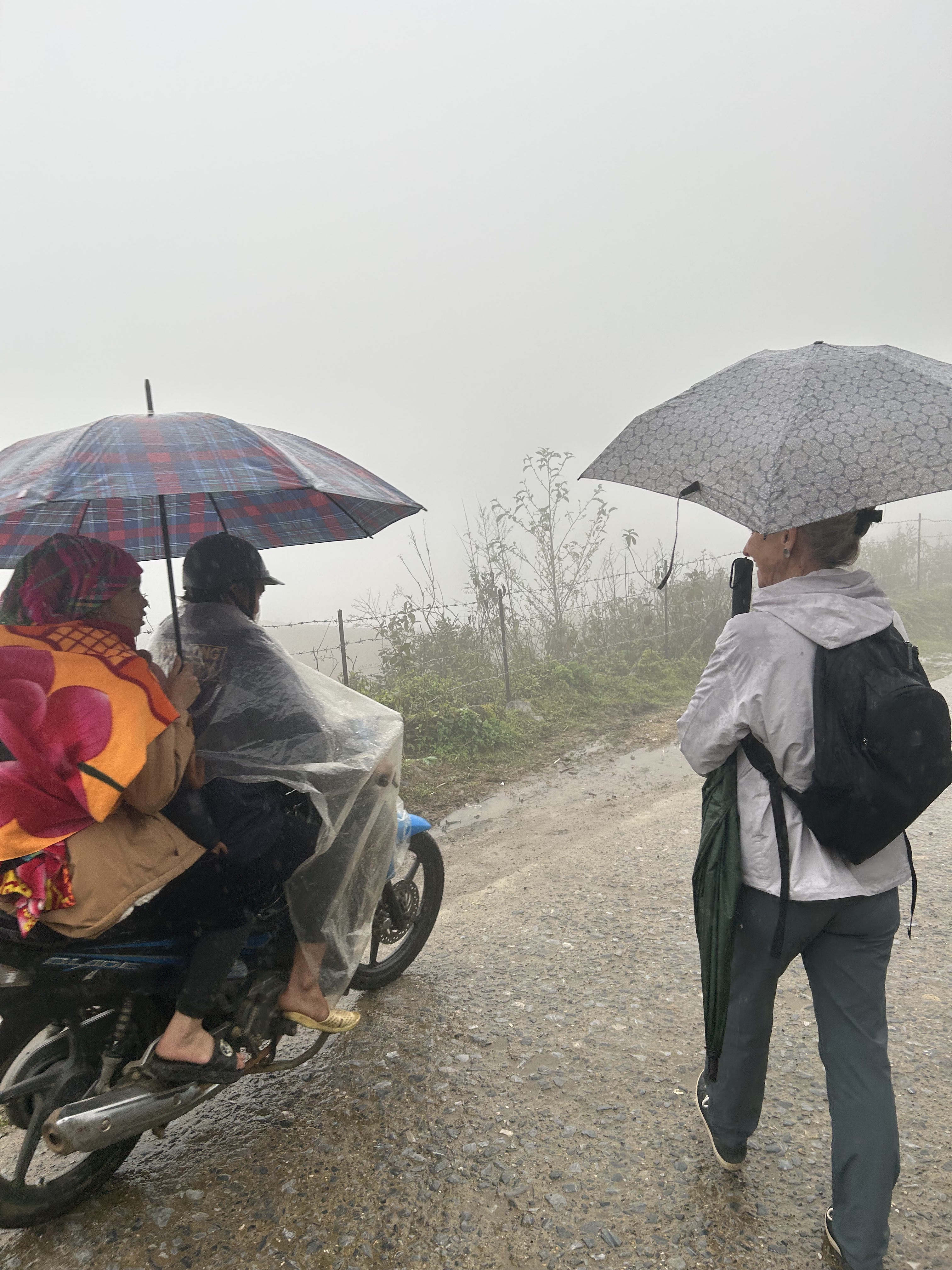
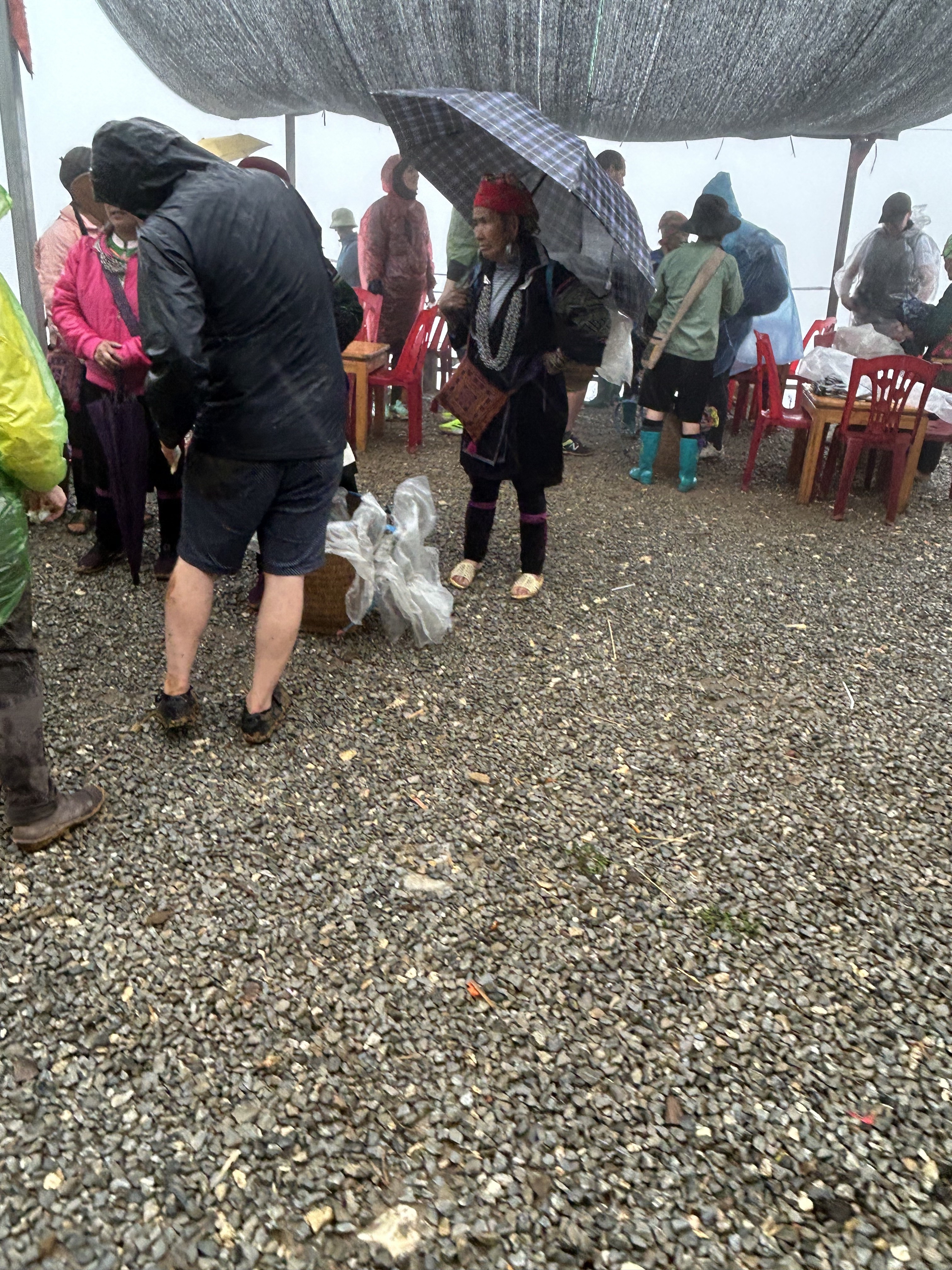
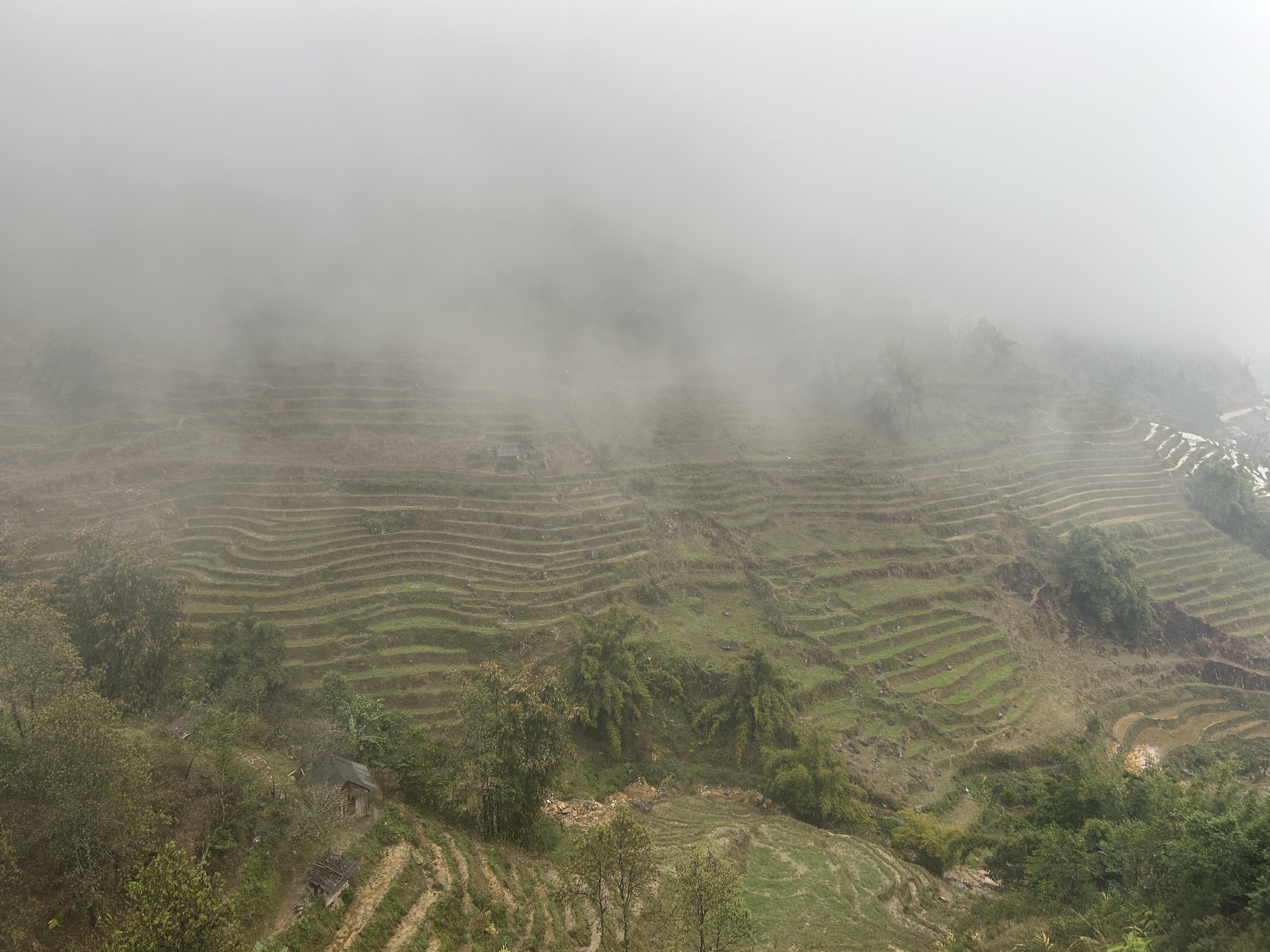
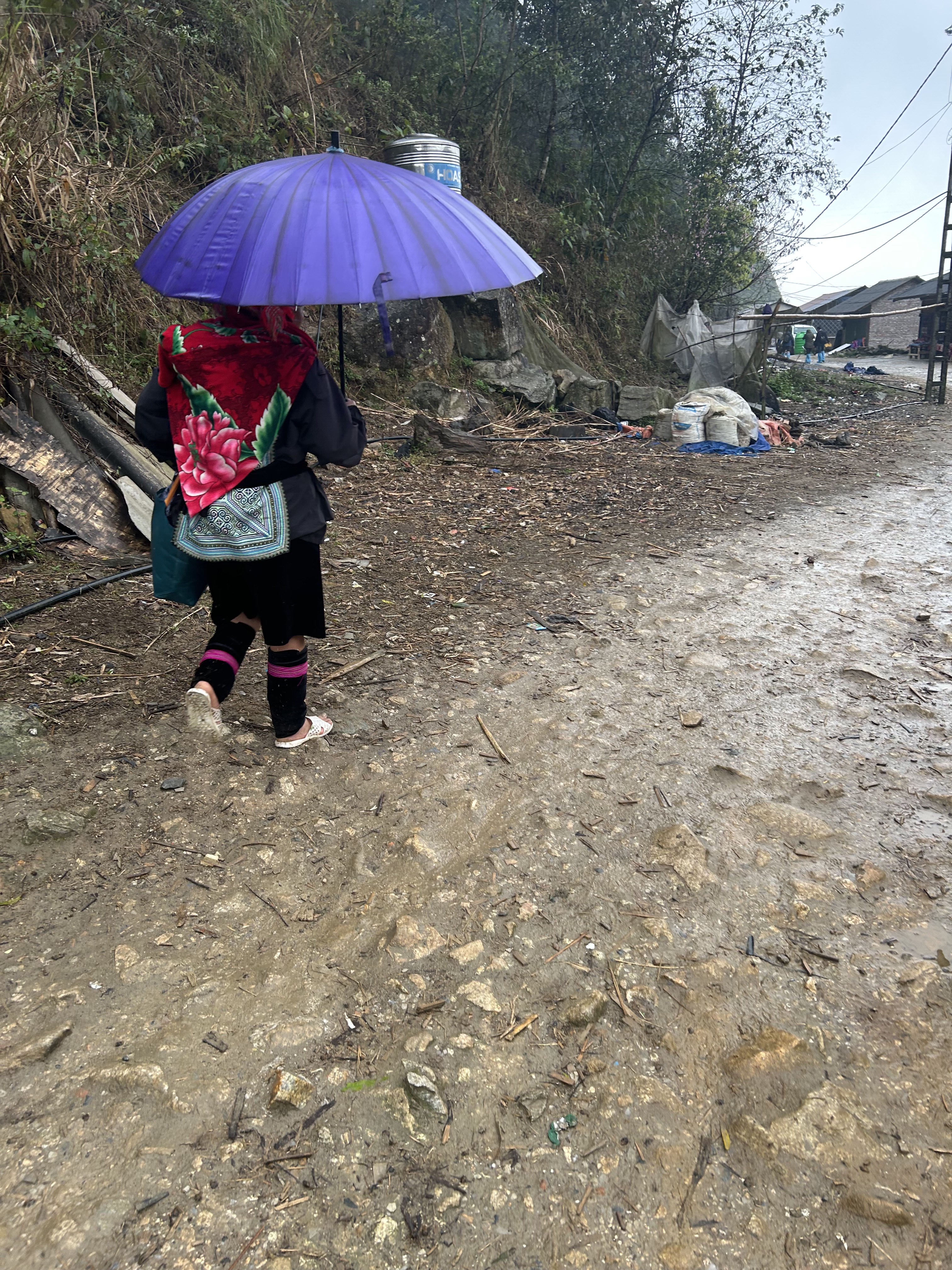
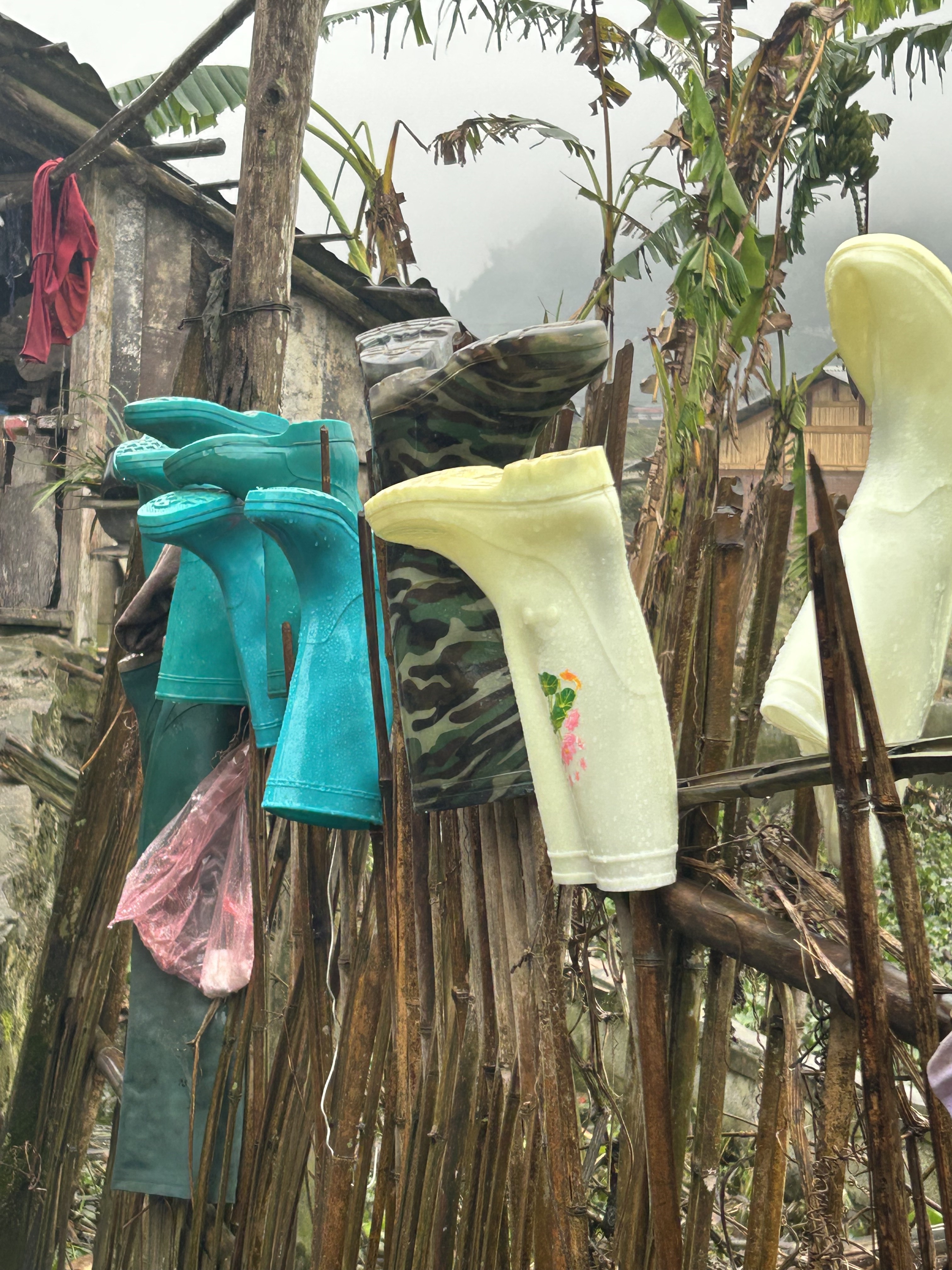
The second day was cool and cloudy/rainy, and we walked down and down and down into a deep valley where there were a Black H’Mong and a Dzao village side by side. The weather provided atmosphere, as we were in cloud a lot of the way down into the valley, watching the locals scooter by with passengers holding umbrellas for themselves and the drivers, and the H’Mong women, dressed in their short velvet pants and hemp tops and leggings, approach tourists to offer help, guidance, good words, some crafts, or anything else that might earn a bit of revenue. While it might be inter-ethnic rivalry, May told us that the H’Mong hew to traditional ways perhaps more completely than other groups, with kids not necessarily going to school and girls marrying extremely young after a ritual she described as 13 or 14 year old girls who capture a boy’s fancy being “kidnapped” and taken back to the boy’s house for three days after which they are asked whether they would like to get married. The adjacent Dzao village was another world – having apparently embraced education, it was alive with homestays and restaurants and coffee places and stores.

Day two…


 Back to Beyond
Leave a reply to dwkent Cancel reply