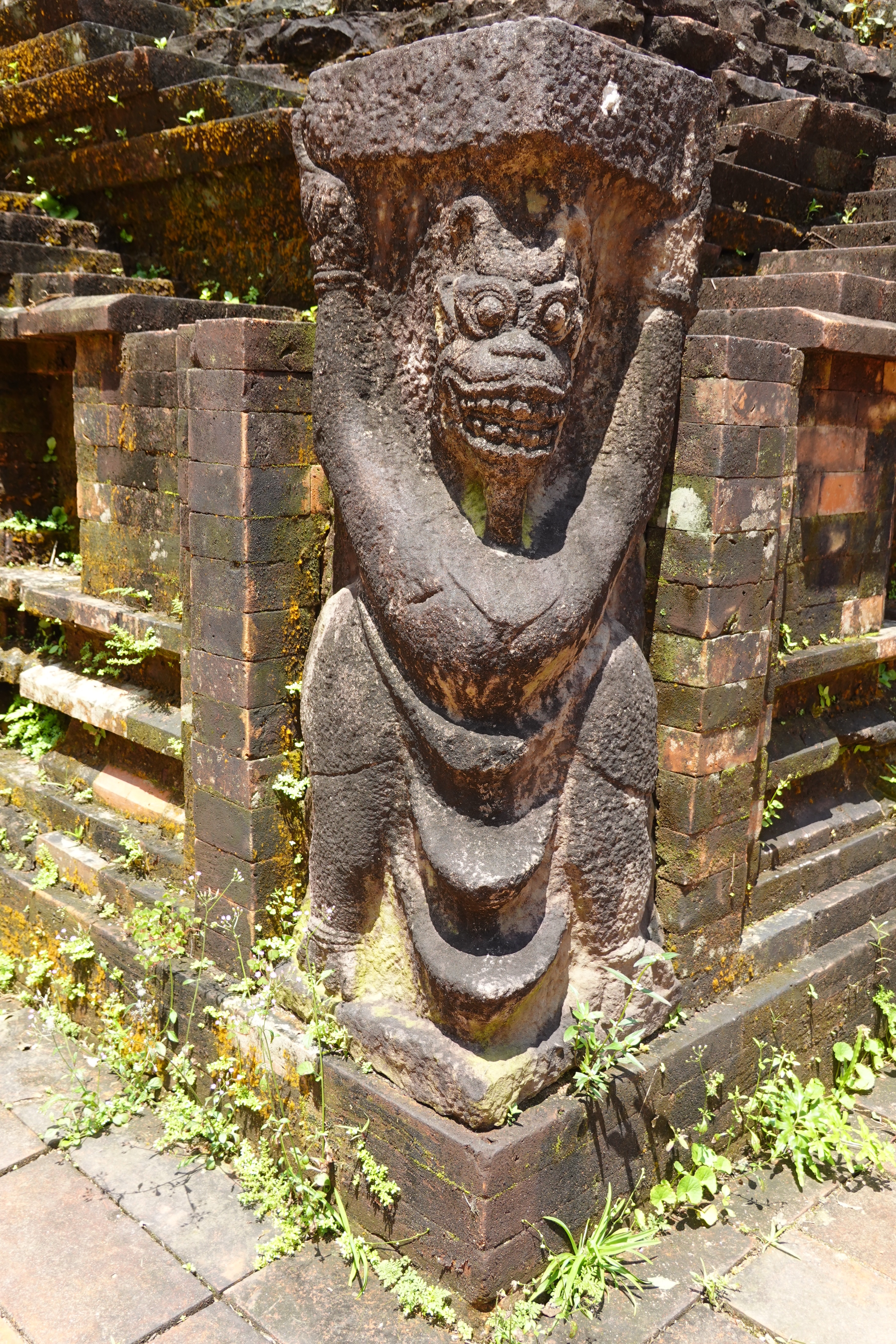
So the Cham, who hailed from Malaysia, ruled the roost in what is now central Vietnam (aka “the Central”) for a long time from shortly after the western calendar switched to AD to sometime in our Middle Ages – the details are a bit foggy. They seem to have made a strategic error when a Cham king married a Vietnamese princess, presumably in an effort to ensure peace and harmony, after which a large number of new Vietnamese in-laws migrated south into Cham country and ensured peace and harmony by edging the Cham out with their sharp northern elbows. What Cham are left are now one of Vietnam’s 54 minority ethnic groups and live mostly in the far south, in the Mekong delta.
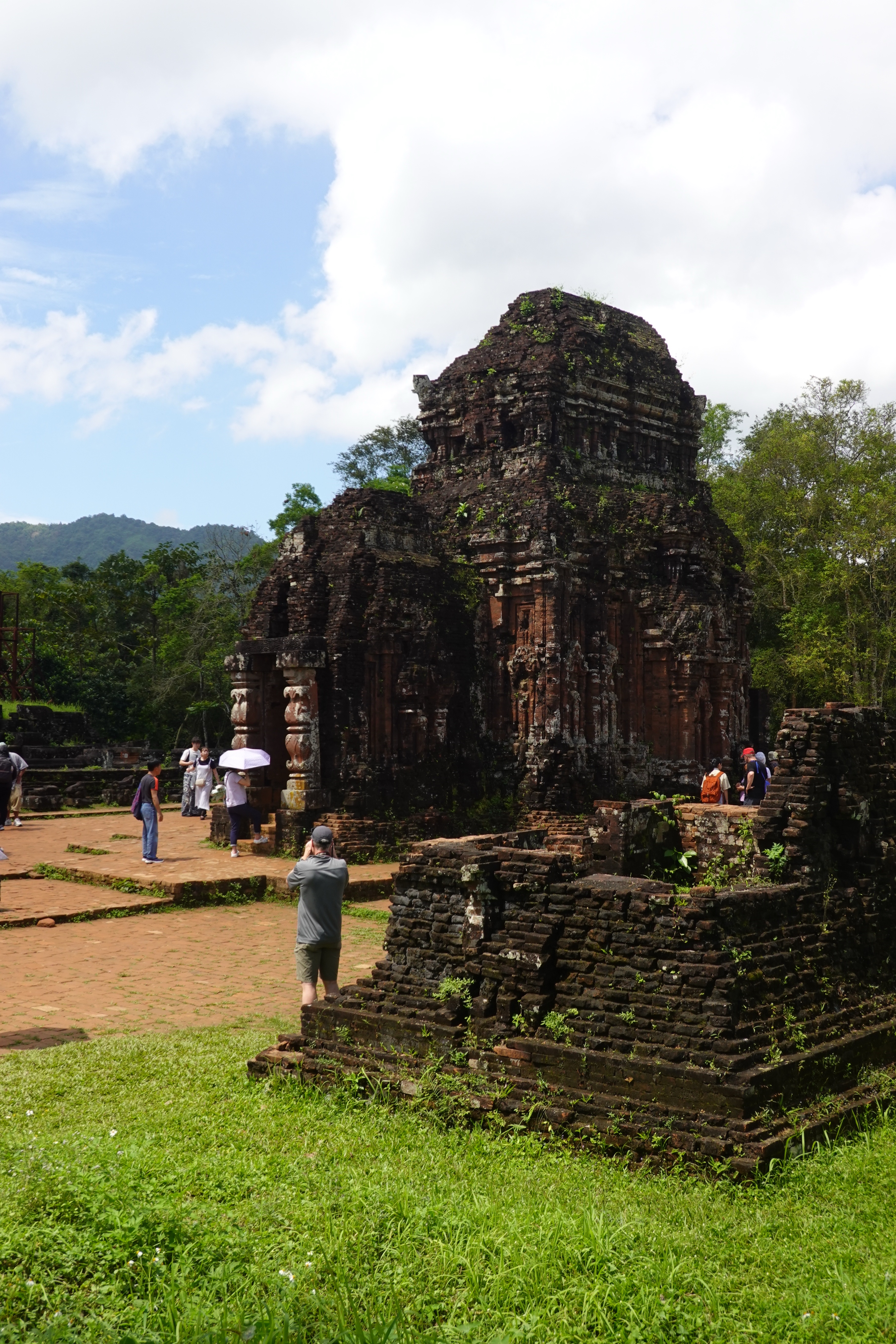
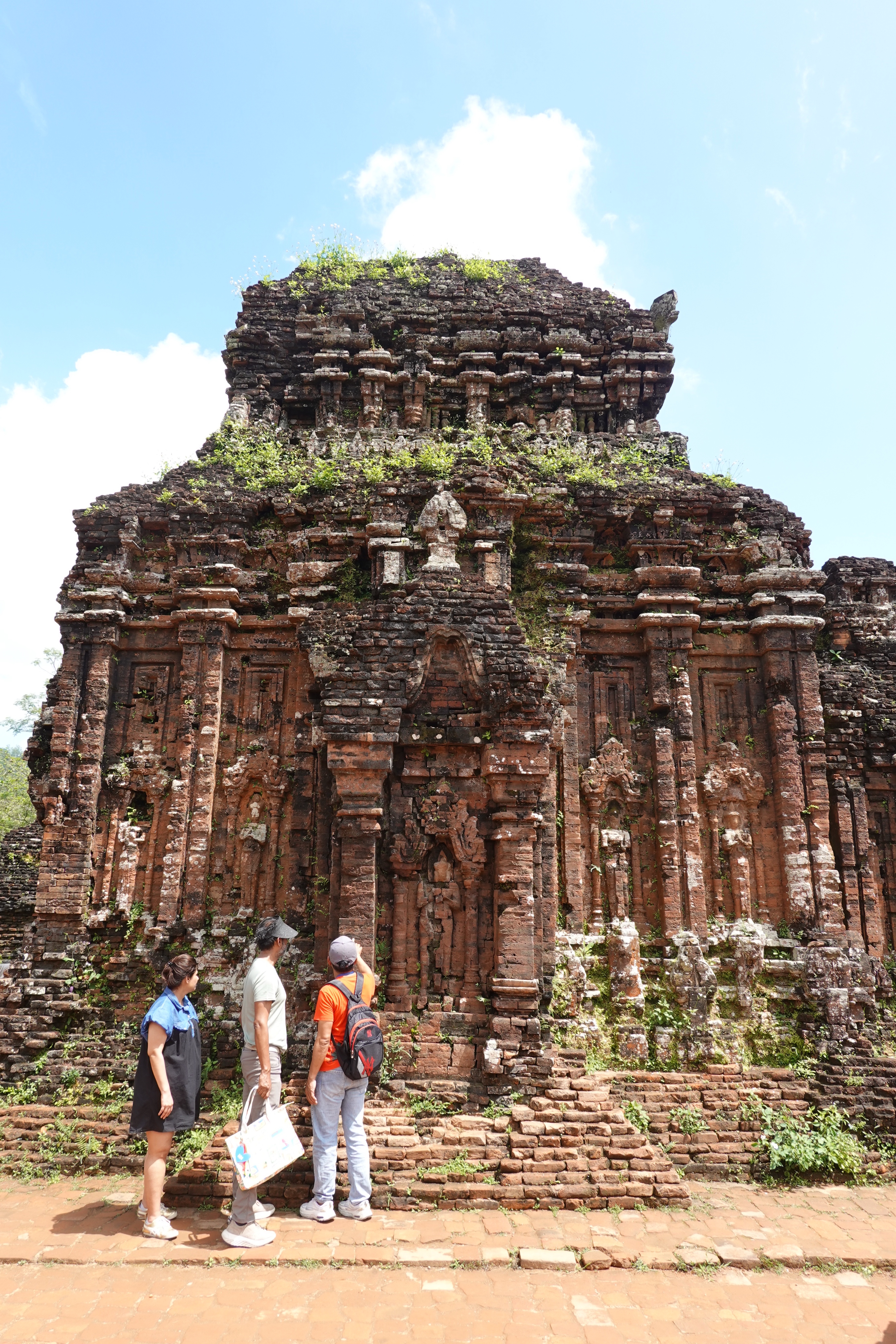
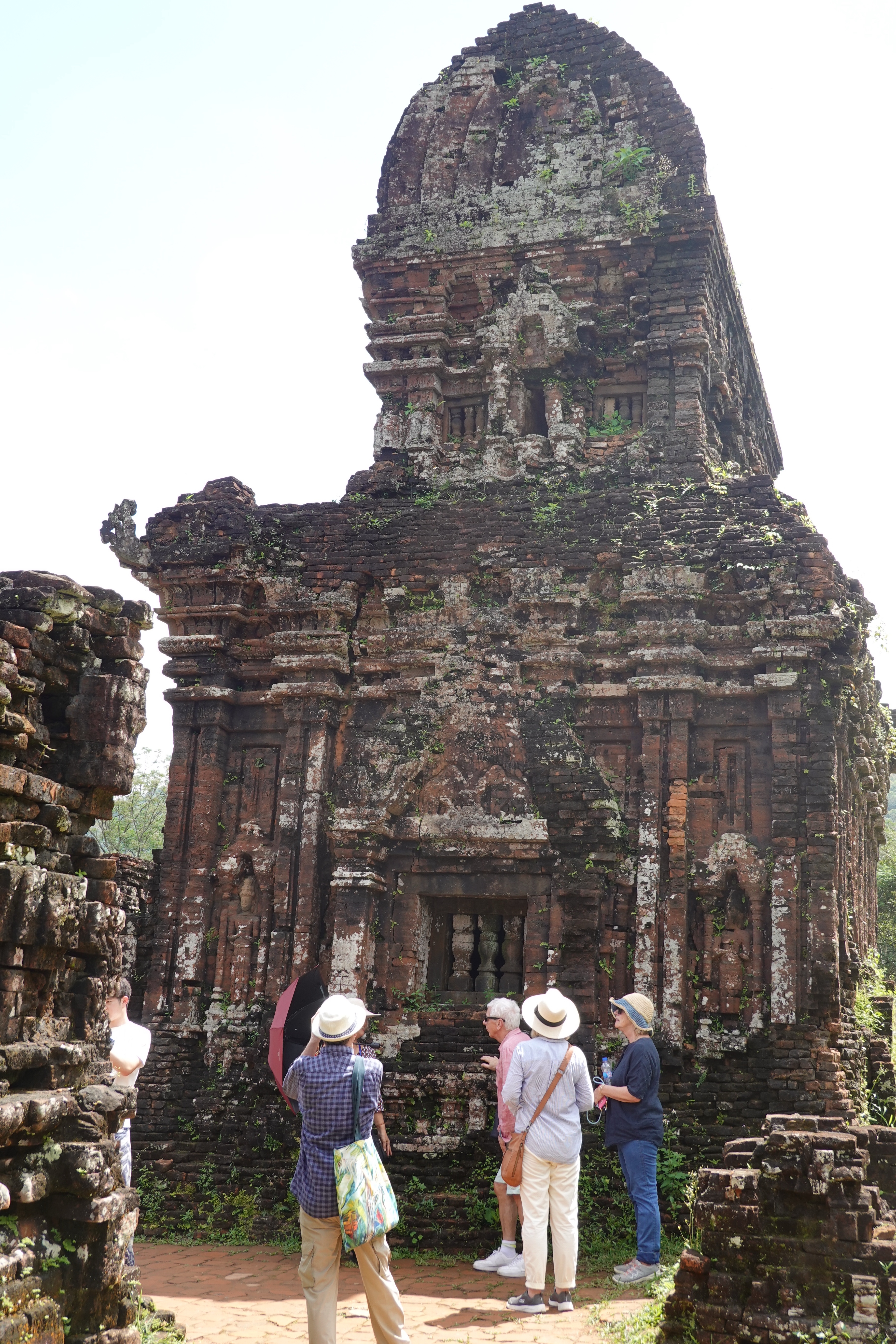
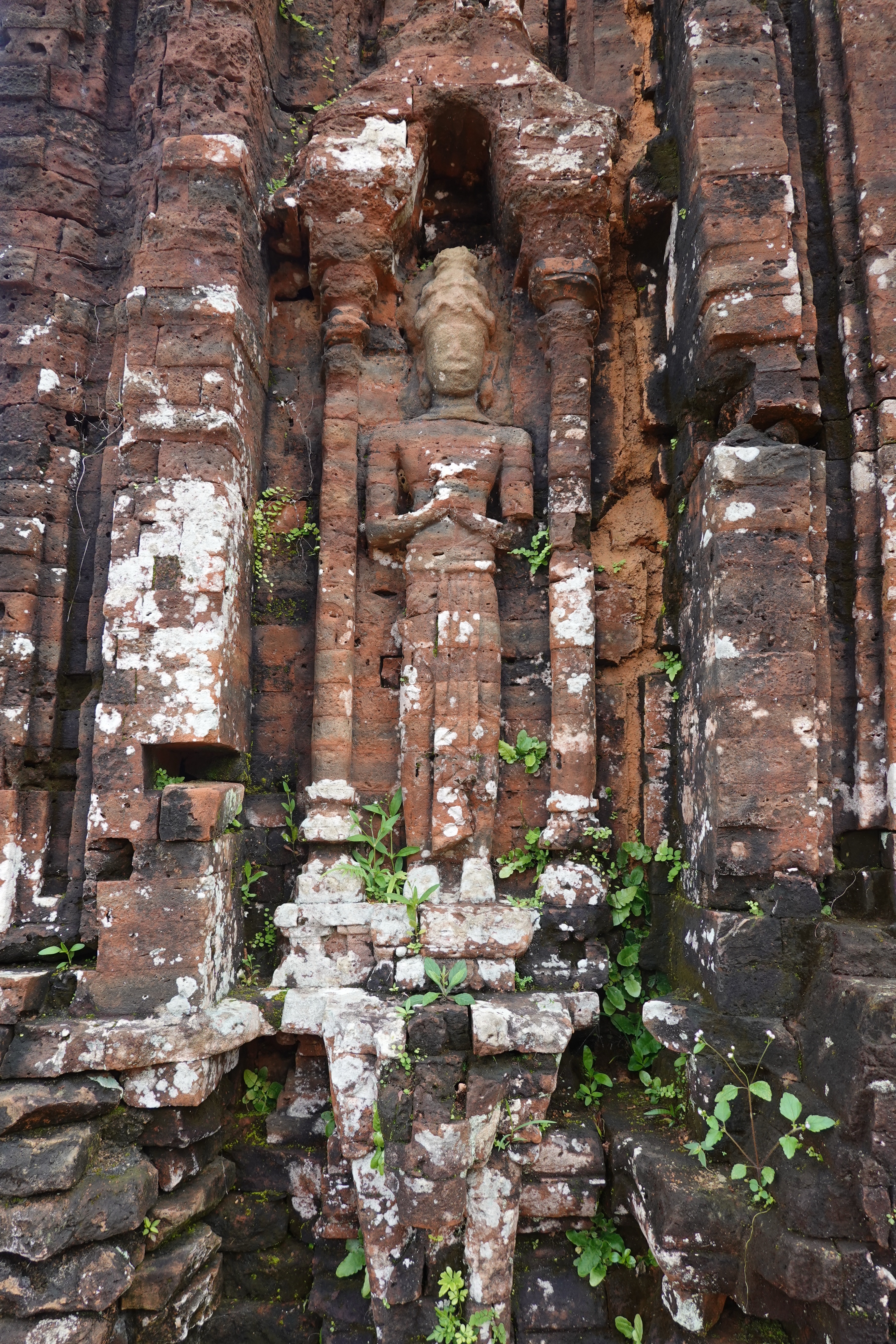
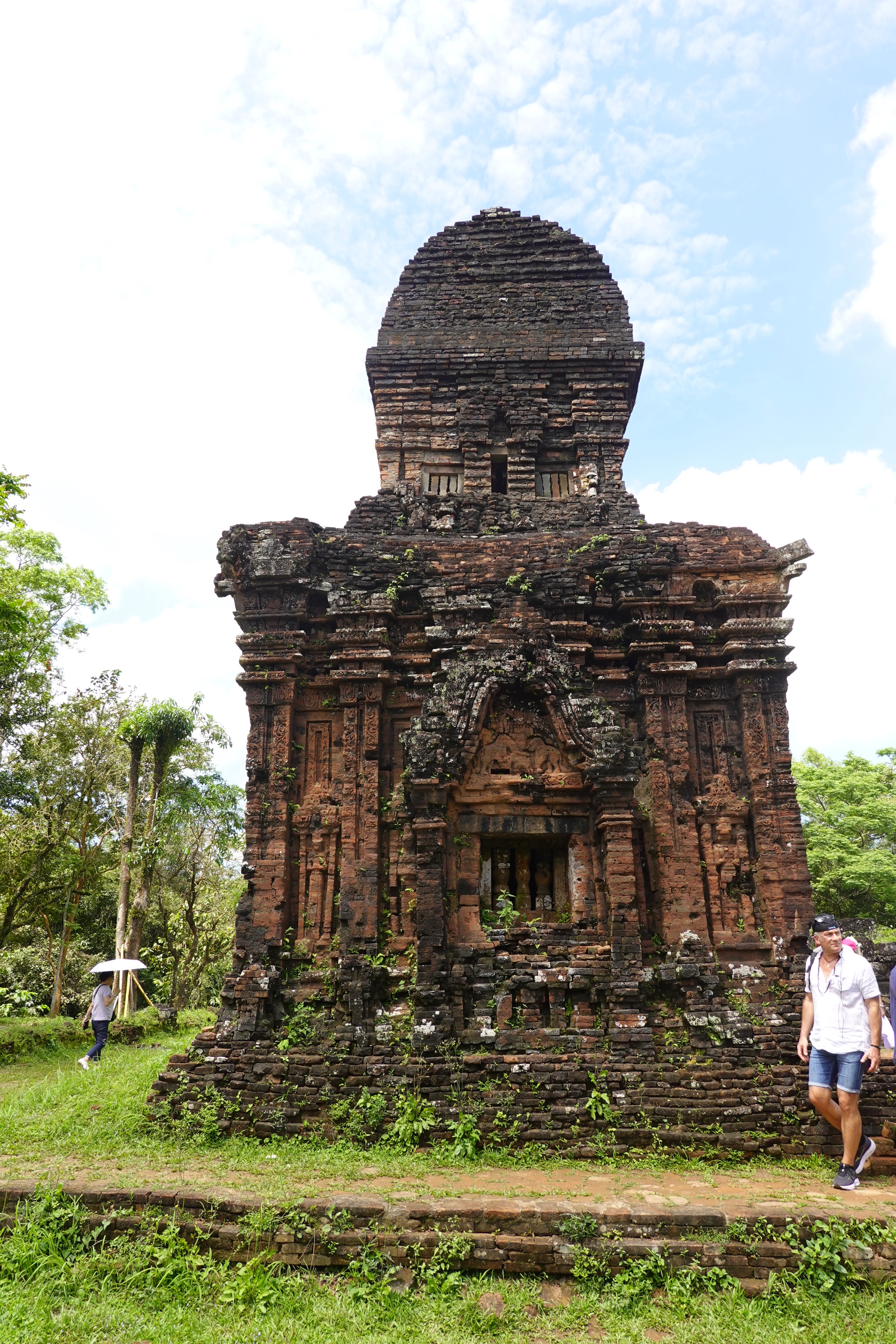
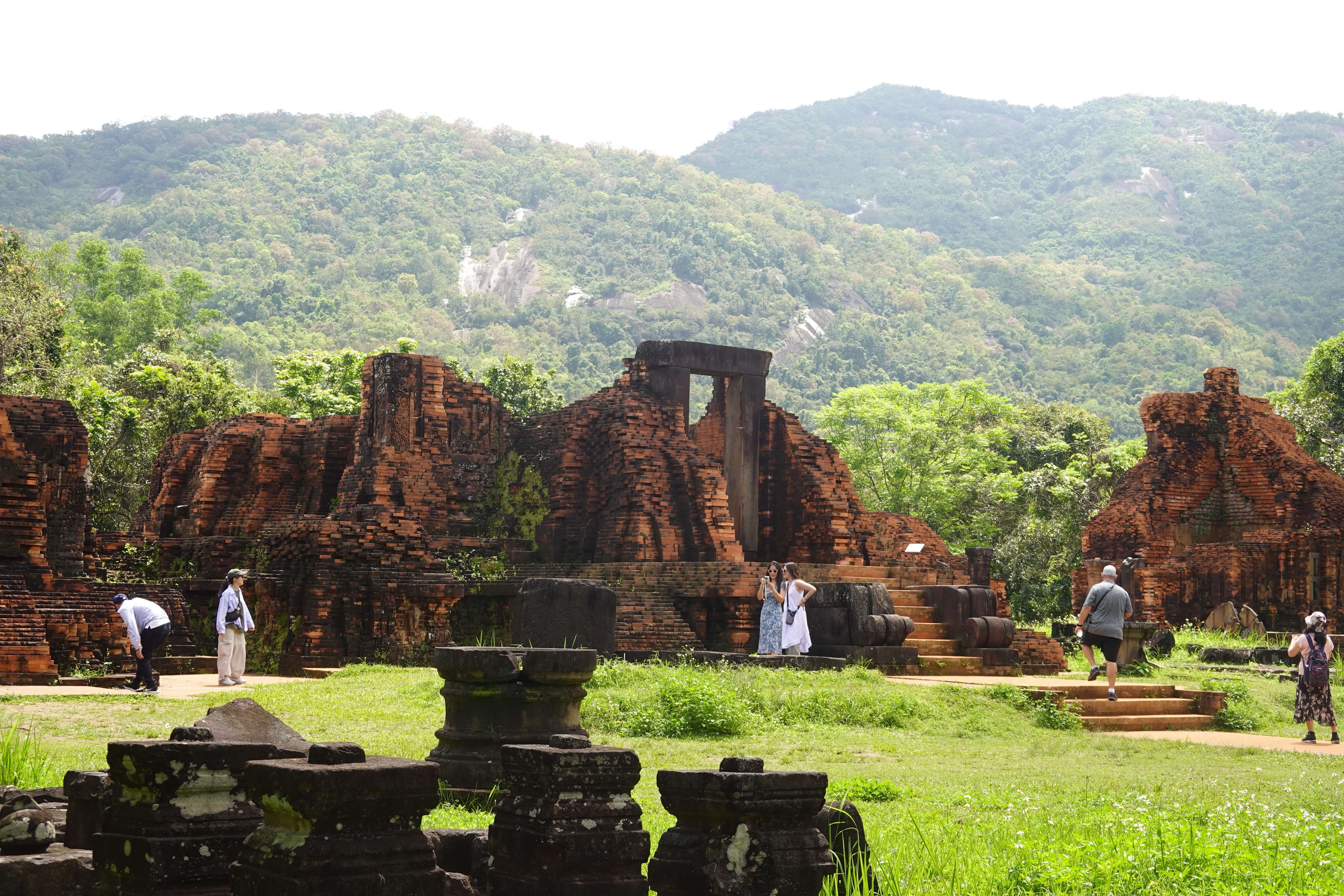
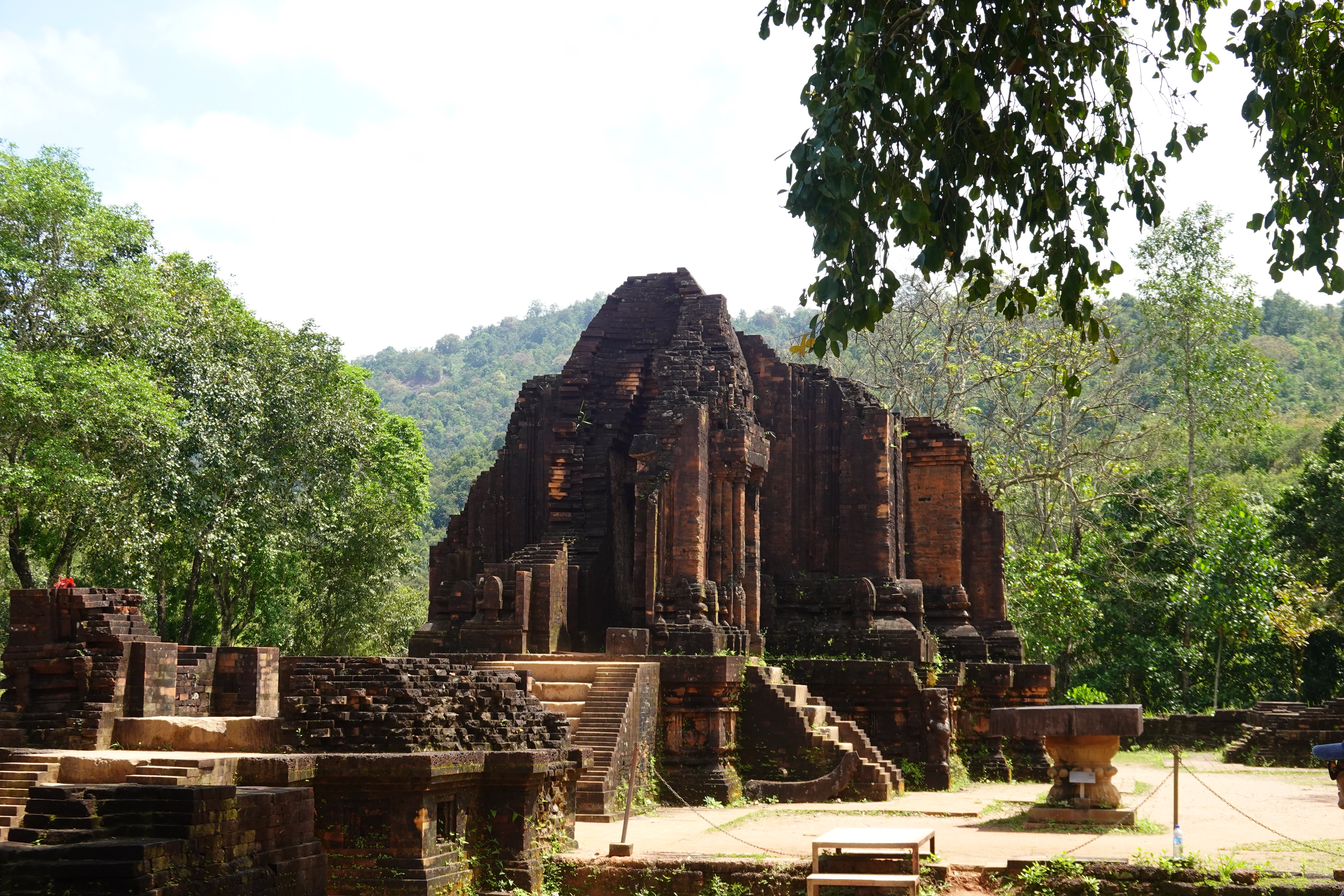
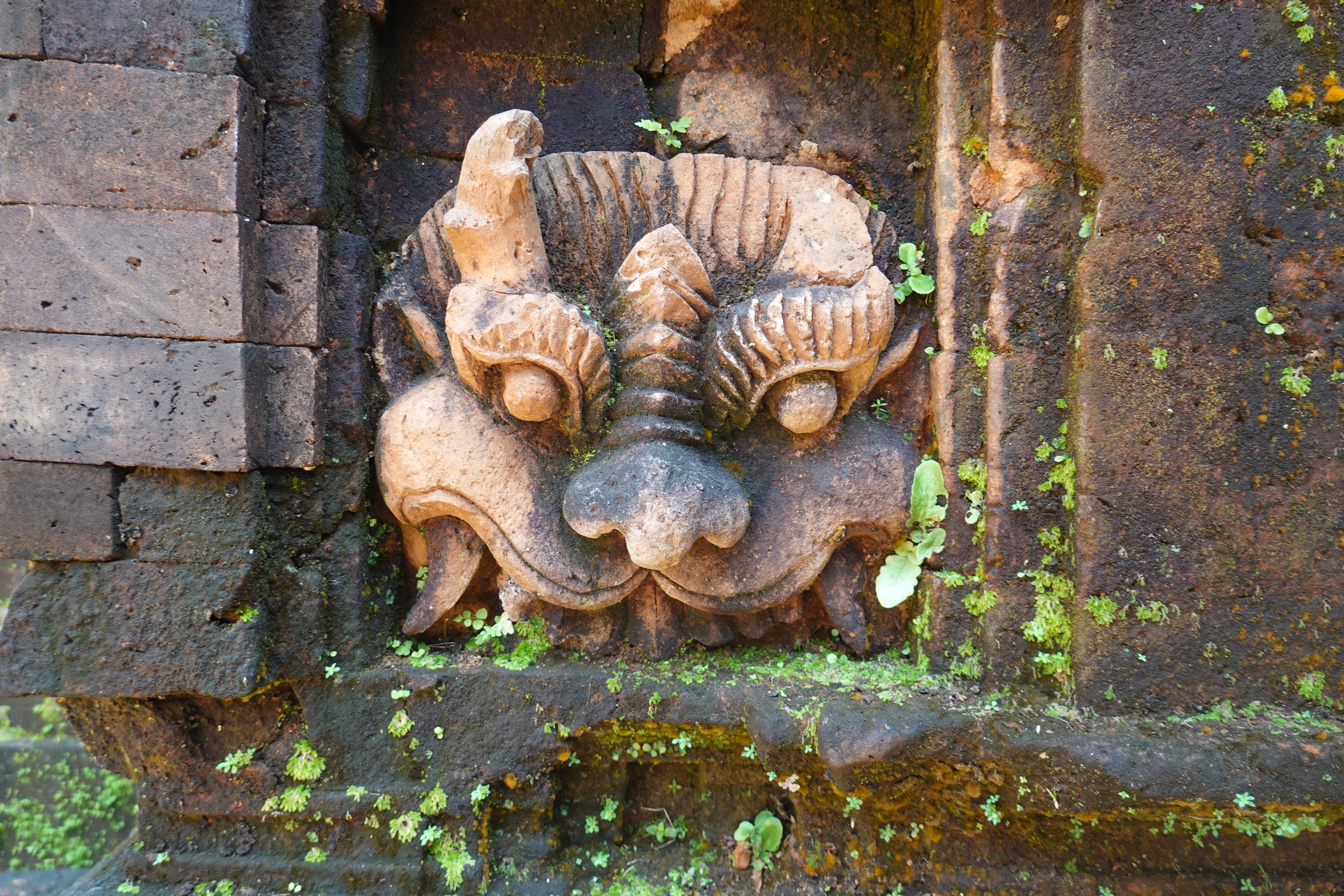
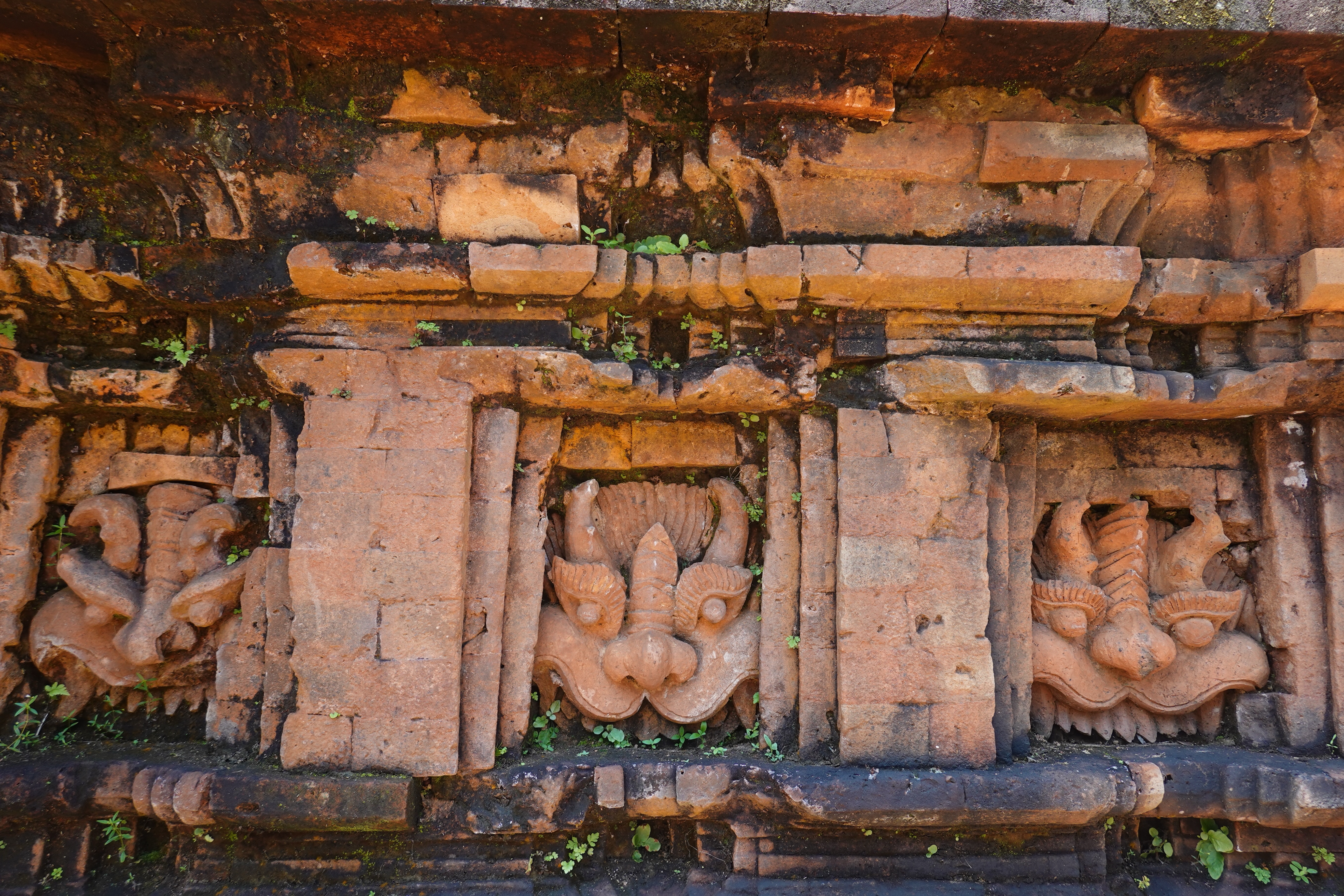
But they left a bit of a legacy in the Central, about an hour up into the hills behind Hoi An. They built a wooden temple complex that apparently burned down in the 7th century and then, having figured out a thing or two in the meantime, rebuilt it in brick and stone across the 7th to the 11th centuries. They were Hindus at the time, and the architecture is reminiscent of the temple complexes in Cambodia, though on a smaller scale.
Having had our appetites whetted in the Cham Museum in Danang, we got ourselves up to the temple complex along with several million other tourists, western and Asian. While perhaps not as serene as it might have been had we bought the place out and had it to ourselves, it was nevertheless evocative and impressive, especially considering how much is left and in what good shape the remains still are, around a thousand years later. It was a bit depressing to learn that weather and time may have done less damage than the B-52s, but we tried not to focus on the large depressions marked “Bomb Crater” and instead to reflect on what these people had accomplished and try to figure out how they did it and how it lasted this long…


 Back to Beyond
Leave a reply to valiantlyswimming90d79cef3d Cancel reply